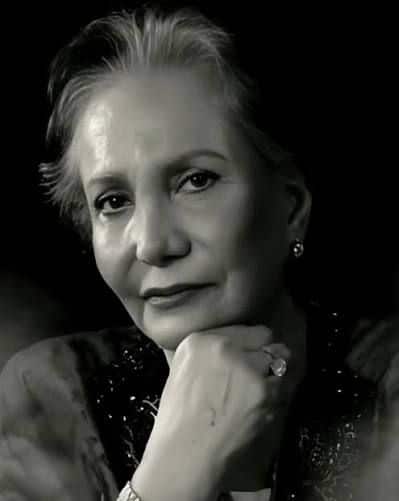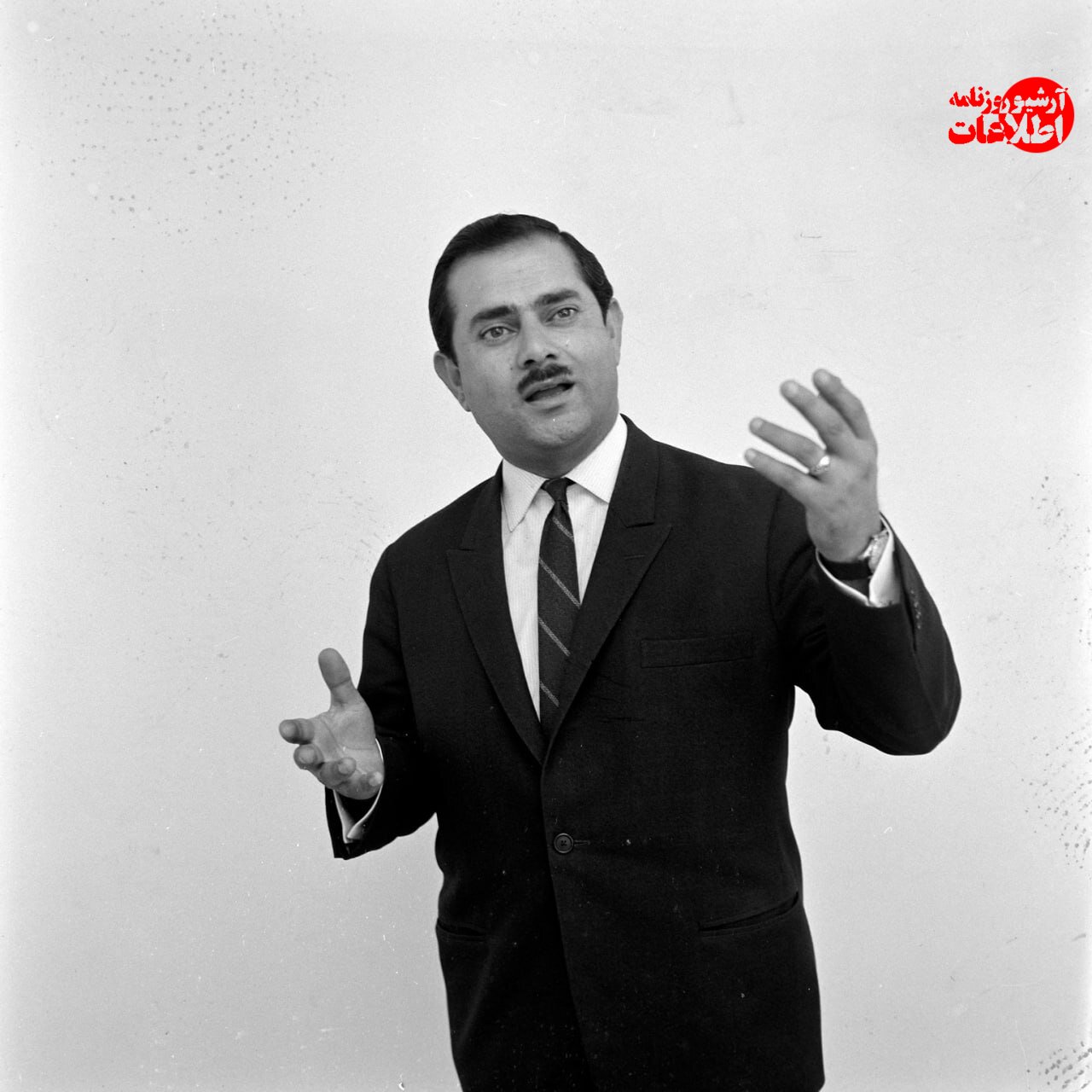
Nasser Masoudi: The Voice of Gilan and a Legacy of Iranian Music

In Iranian music, certain singers have become emblematic of their homelands through their distinctive voices. Historical figures such as Eghbal Sultan, who epitomized the grandeur of Azerbaijani music, and Taj Isfahani, who conveyed the authentic essence of Isfahan, serve as notable examples from the Qajar era. Nasser Masoudi occupies a similar position; his voice emerged as a symbol of Gilan while also achieving national acclaim. Before him, Master Ahmad Ashurpur represented Gilan’s musical landscape, but his extended residence outside Iran limited his continuous engagement in the music scene. In contrast, Masoudi’s consistent presence allowed him to introduce the voice of Gilan to audiences across Iran.

During Masoudi’s formative years, radio stations were primarily active in Tehran. In 1955, radio transmitters began operating in Rasht; although no archival records from that time remain, those high-quality tapes served as the initial communication bridge between Masoudi’s voice and listeners far beyond Gilan. Fortunately, eight years prior to Masoudi’s rise, Master Abolhassan Saba came to Gilan for a one-year assignment and established a music school. He trained numerous students, and given the cultural openness of Gilan, there were no restrictions on music education. Even artists from this region drew inspiration from non-Iranian music. In this nurturing environment, Masoudi grew up and took his first significant steps in music concurrently with the establishment of Rasht Radio at the age of 20.

Masoudi possessed an extraordinarily sensitive ear; his auditory abilities allowed him to accompany any style of music. The flexibility of his voice enabled him to sing across various genres. He gained recognition around 1959–1960 and consistently expressed gratitude to Ahmad Ebadi, the esteemed master of music. His admiration for renowned singers such as Manouchehr Shafiei, Manouchehr Homayounpour, and Ghasem Jabli significantly influenced his artistic trajectory.

A pivotal factor in Masoudi’s rise to fame was the burgeoning gramophone record production industry. By the 1960s, these records transitioned from luxury items to accessible commodities for the general public. This shift allowed the voices of singers like Masoudi to reach a broad audience, leading to his national recognition.

Masoudi stands out as one of the few singers who began his career within an ethnic-regional context using a local dialect while simultaneously achieving acclaim as a performer of classical Persian music (Dastgahi). He successfully navigated both paths, gaining national popularity in local music. His works, whether presented as local ballads or classical compositions, exhibit remarkable longevity.

Northern Iran comprises three distinct cultural regions linked by a verdant belt of forests, each exhibiting significant cultural differences:
• Gorgan: Known for its Turkmen music, which possesses a unique flavor.
• Mazandaran: Renowned for its extensive rural music, whose roots trace back to the Sassanian era.
• Gilan: Celebrated for its rich musical diversity, with Masoudi as the representative of its urban sound.

Masoudi elevated the voice of Gilan to a national platform and is etched in the annals of Iranian music as a symbol of a lush and diverse region.

(Excerpted from the video magazine program “24” featuring Alireza MirAliNaghi)
Post a Comment


Warning: Undefined variable $user_ID in C:\host-websites\harmonytalk.com\domains\en.harmonytalk.com\www\wp-content\themes\harmonytalk\comments.php on line 93
Required fields are marked *
*
*
Your email is never shared.

Transition to Enlightenment: Six Lectures on Mozart’s String Quartets (5)

The late 18th century was marked by profound societal changes across Europe, characterized by the rise of the bourgeoisie and the reshaping of musical patronage. Composers like Mozart responded to these shifts by adapting their compositional styles to align with the tastes and sensibilities of the emerging middle class. This article seeks to explore this phenomenon through an analysis of Mozart’s K. 499 quartet, also known as the “Hoffmeister” quartet, and his Prussian quartets, alongside the works of his contemporaries. By examining the evolution of the string quartet genre within the context of changing social structures and aesthetic preferences, this study aims to shed light on the dynamic relationship between music and society.

Nasser Masoudi: The Voice of Gilan and a Legacy of Iranian Music

In Iranian music, certain singers have become emblematic of their homelands through their distinctive voices. Historical figures such as Eghbal Sultan, who epitomized the grandeur of Azerbaijani music, and Taj Isfahani, who conveyed the authentic essence of Isfahan, serve as notable examples from the Qajar era. Nasser Masoudi occupies a similar position; his voice emerged as a symbol of Gilan while also achieving national acclaim. Before him, Master Ahmad Ashurpur represented Gilan’s musical landscape, but his extended residence outside Iran limited his continuous engagement in the music scene. In contrast, Masoudi’s consistent presence allowed him to introduce the voice of Gilan to audiences across Iran.

From Past Days…

The Structure of Kurdistan Daf (IV)

Researcher: Mohammad Tarighat Translator: Fatemeh Alimohammadi Daf Structure The Structure of Daf in different cities of Iran has a great variety in terms of dimensions, components and even appearance; some of which are as follows: – Square Daf, on which the skin was stretched either on one or both sides, with strings installed inside it…
Read More »

The Structure of Kurdistan Daf (VII)

Conclusion

“Daf” is one of type of percussion instruments that has a long history and is commonly known as circular instruments (with a rim). In some tribes, Daf was used as the main instrument in festivity and joy ceremonies; in another tribe it was used as the main instrument for war and campaign ceremonies and some others used it for ritual and religious ceremonies.

Whose dream?! Whose reality?!

(A review of the “So Faraway” album; Tar and Tonbak duet; Siavash Imani, Pedram Khavarzmini)

Principles of Playing Violin (V)

3/1/2/5: When the first finger lands next to the nut, continuation of first phalange of this finger, on back of the hand, should be in line with continuation of the back of the wrist and the left hand; moreover, it should not pass them and bend at knuckles. Otherwise, an uncommon stretch is created in first finger’s knuckle also reducing the freedom of other fingers (especially the fourth finger) in finger placement.

Women and the Music Environment in Iran

The life territory of the female-male relations in the Iranian cultural context is basically a domestic territory and not a social-living one in the labour and leisure domains. To prove this, it only suffices to consider the Iranian men’s viewpoints about women. For the Iranian men, there are three perspectives regarding the women: mother, sister and wife. Mother represents the emotional territory; sister represents the logical territory at home while wife represents the sexual territory.

Banan: the Artist of the Age

Gholam Hossein Banan was born in 1911 in Tehran. He was born in an affluent art-loving family who were Naser al-Din Shah Qajar (1848-1896)’s relative. The Qajar King was his mother’s uncle on her father’s side. He learnt his first lessons in music while his father sang Iranian avaz (improvised rhythmic-free singing), he then attended classes by the renowned Iranian composer, Morteza Neydavoud (1900-1990) along with his sisters; the composer is, therefore, considered as his first teacher. He then learnt Iranian avaz under the supervision of Mirza Taher Zia Resaee (Zia-o Zakerin) and Naser Seif in an oral manner.

Negation of Changes in Iranian Music: Embracing Tradition

The perspective that denies any alteration or innovation beneath the realm of Iranian music, and more broadly, the performance and even the structure of Iranian music instruments, stems from the discourse of “tradition-oriented”* and the “return to self” movement in Iranian music. Given that some educators still adhere to this discourse and emphasize the necessity of preserving tradition, a perception is formed among art students that Iranian music, including Radif, lacks dynamism and is confined within a rigid framework.

Jamshid Andalibi passed away!

Jamshid Andalibi, one of the most famous ney players in Iran, passed away on the fifteenth of Esfand, 1402, at the age of 66 due to a heart attack at his private residence. Andalibi was a member of a family that had a significant presence in the field of Iranian music in the sixties and…
Read More »

 Ahmad Pejman Passed Away!

Composer and music teacher Ahmad Pejman (1935–2025) passed away on August 29 in Los Angeles, USA, after several weeks of illness. His most recent symphonic work performed in Iran was Land of the Brave (“Sarzameen-e Delavaran”), which was staged in 2017 with the Tehran Symphony Orchestra. According to the family’s decision, his body will be laid to rest in the United States.

The Mystery of Messiah

Antonio Stradivari (1644 – 18 December 1737) was an Italian luthier and is considered the most significant and greatest artisan in this field.