In Iranian music, certain singers have become emblematic of their homelands through their distinctive voices. Historical figures such as Eghbal Sultan, who epitomized the grandeur of Azerbaijani music, and Taj Isfahani, who conveyed the authentic essence of Isfahan, serve as notable examples from the Qajar era. Nasser Masoudi occupies a similar position; his voice emerged as a symbol of Gilan while also achieving national acclaim. Before him, Master Ahmad Ashurpur represented Gilan’s musical landscape, but his extended residence outside Iran limited his continuous engagement in the music scene. In contrast, Masoudi’s consistent presence allowed him to introduce the voice of Gilan to audiences across Iran.
Tag Archives: Naser Masoudi
Latest posts
- Parva, Iranian Singer, Passes Away!
- Iraj Passes Away!
- Sohrab Pournazeri Becomes a Member of the GRAMMY Academy
- Shapour Rahimi Passes Away
- ShirMohammad Espandar Passes Away
- Jamshid Chemirani Passes Away
- Book “Iranian modal system (Dastgah music) modes” Published
- Transition to Enlightenment: Six Lectures on Mozart’s String Quartets (5)
- Nasser Masoudi: The Voice of Gilan and a Legacy of Iranian Music
- Farhad Poupel: The Voice of the Shahnameh in the Orchestras Around the World
- Five Major Myths About Mozart’s Life
- Bahma Rajabi Passed Away!
From Past Days…
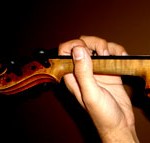
Principles of Violin Playing (III)
Violin players should always pay attention to the proper position of the left thumb and other points related to it and to its joining point to the palm.

Polyphony in Iranian Music (II)
With regard to each polyphonic form, only one specific and distinguished example is analyzed. These polyphonic forms are as follows:
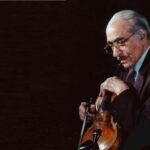
A Look at Ali Tajvidi’s Manifold Musical Activities (II)
Tajvidi thought of studying harmony and orchestration with Houshang Ostvar (who was eight years younger than him) at a time when he had gained a reputation among musicians. His humbleness, making him willing to kneel before the scholars at any age and position, became the key to his scientific success. After this period, Tajvidi made some of his works polyphonic, the most prominent of which is “Burn” set to a poem by Abdullah Ulfat. However, his ability to make his works polyphonic was not so great to make him self-sufficient; so he depended on musicians such as Farhad Fakhreddini, Fereydoun Naseri, Kambiz Roshanravan, Fereydoun Shahbazian and Morteza Hananeh for the arrangement of his compositions.
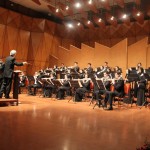
Tehran Flute Choir Established
Tehran Flute Choir was established in 1394 (late 2015) by Firouzeh Navai. Tehran Flute Choir, Iran’s first largest flute choir, recruited its members mostly from young talented flutists of Iranian Flute Association. Featuring piccolo, flute, alto flute and bass flute, Tehran Flute Choir, directed by Firouzeh Navai, premiered under the batons of Saeed Taghadosi on January 7-8, 2016 at Roudaki Hall in Tehran.
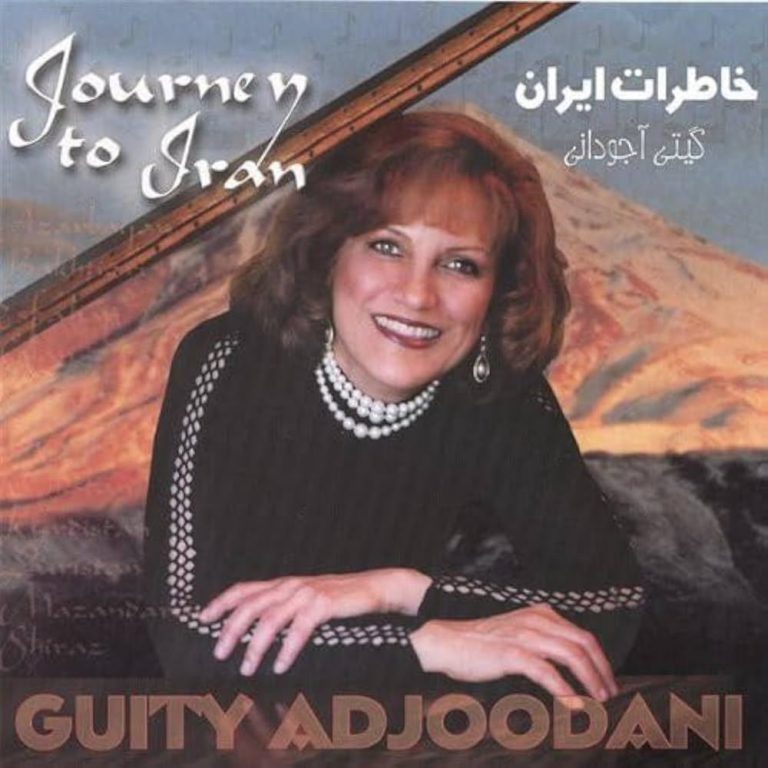
Journey to Iran Revisited: Celebrating 20 Years of Guity Adjoodani’s Return to Persian Roots
This year marks the 20th anniversary of “Journey to Iran,” an album by Iranian pianist Guity Adjoodani that has resonated with audiences worldwide. Released two decades ago, this album is a beautiful tapestry of twenty Persian folk songs, each carefully selected from the rich musical traditions of various regions in Iran. It also features four notable compositions by the esteemed Javad Maroufi (1915-1992): “Prelude,” “Jila Fantasia,” “Golden Dreams” (Khaab-haa-ye Talaayi), and “Isfahan Rhapsody.” Additionally, the album includes the beloved song “Kiss Me” (Maraa Bebous) by Majid Vafadar (1912-1975), adding depth to an already impressive collection.
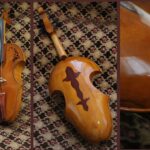
Interview with the Makers of the New Qeychak (III)
In this project, my specialized responsibility was the basic drawings of the desired instrument with the help of engineering and mechanical software. I have also the carried out phases related to engineering designs, related variables, and volume and weight calculations under Mr. Ziaei’s direct supervision from the very beginning. Regarding the challenges of this work, suffice it to say that the set of designs for the instrument lasted more than 9 months in the final stage of the project only.

Non-profit “Microtona” Project Released
Microtona is a sixty-eight-page Booklet with personal comments by the contributing microtonal artists. The booklet also includes a DVD which consists of 8 original video tracks and 9 original audio tracks. The project is an international one featuring unpublished pieces by composers from Iran, Japan, U.S., France, Austria, Germany and Belgium.
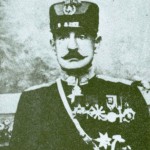
Gholam Reza Khan Minbashian: a pioneer in Iranian music (II)
Gholamreza Khan Minbashian taught courses such as organology, orchestration of military music and harmony based on the books which were translated from French into Persian with the help of Aliakbar Mozayyan-o-Dolleh (1846-1932).
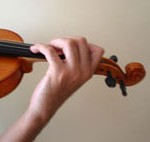
Principles of Violin Playing (VIII)
1.5.1.3.sometimes, a player, due to different reasons, may decisively want to play continuously two notes with a half-step by means of the same finger, in such a case, it’s necessary to open the interior curve of the finger like a spring. Naturally coming back, the curve of finger should be closed and the finger should become curved shape again (see paragraph 3.1.2.1).

Quality Decline in Regional Music Festivals
Regional music festivals are organized to, firstly, introduce the music of different regions and, secondly, to support its performers. Regional music festivals are held in large cities for various reasons, including the availability of financial and executive facilities and the presence of an audience. However, the organization of these festivals has always been one of the challenging issues of ethnomusicology. The reason is that the presence of regional music performers in large cities places them in a context other than the context they would normally perform in their homes; consequently this change in situation leads to changes in the quality of their performance.