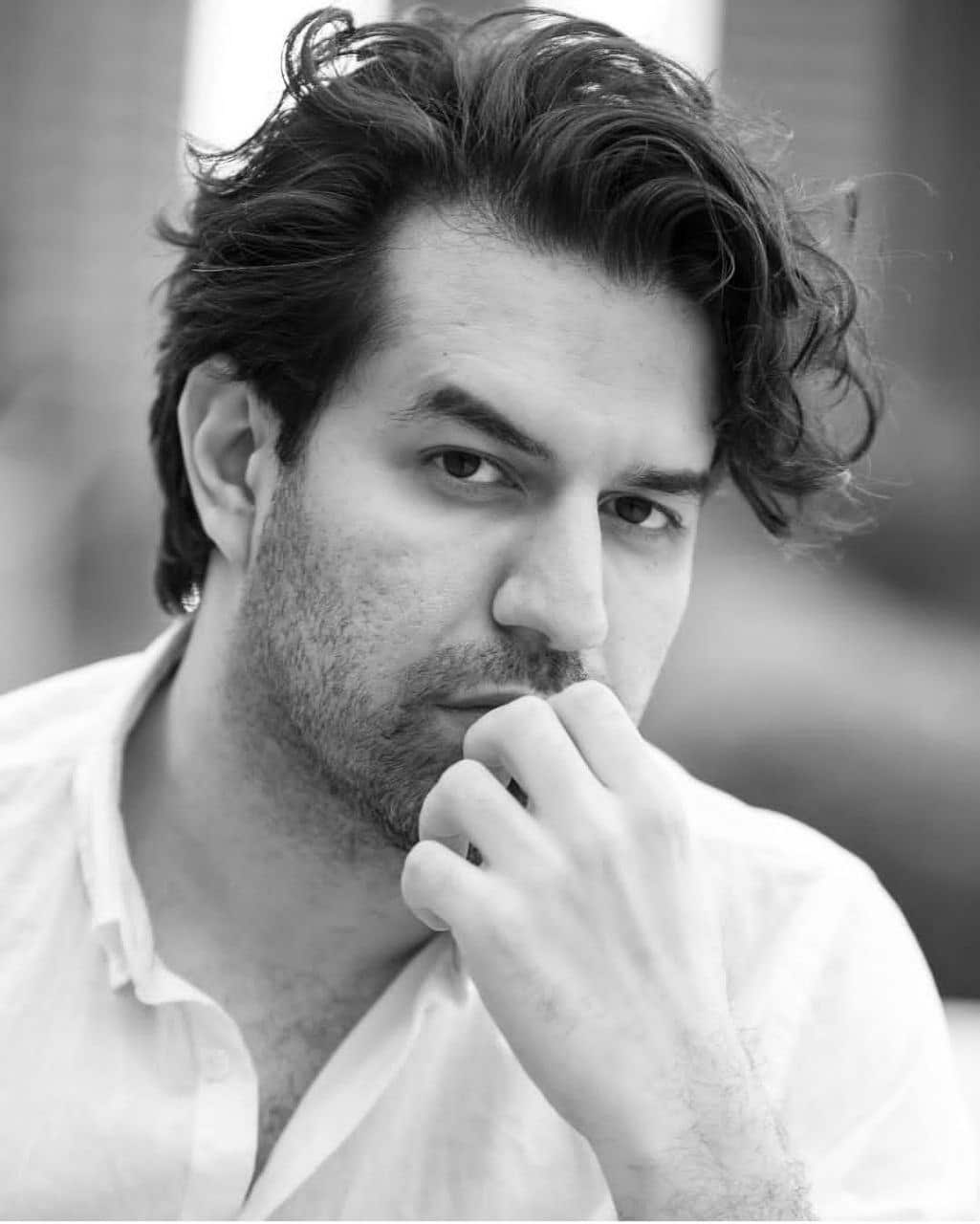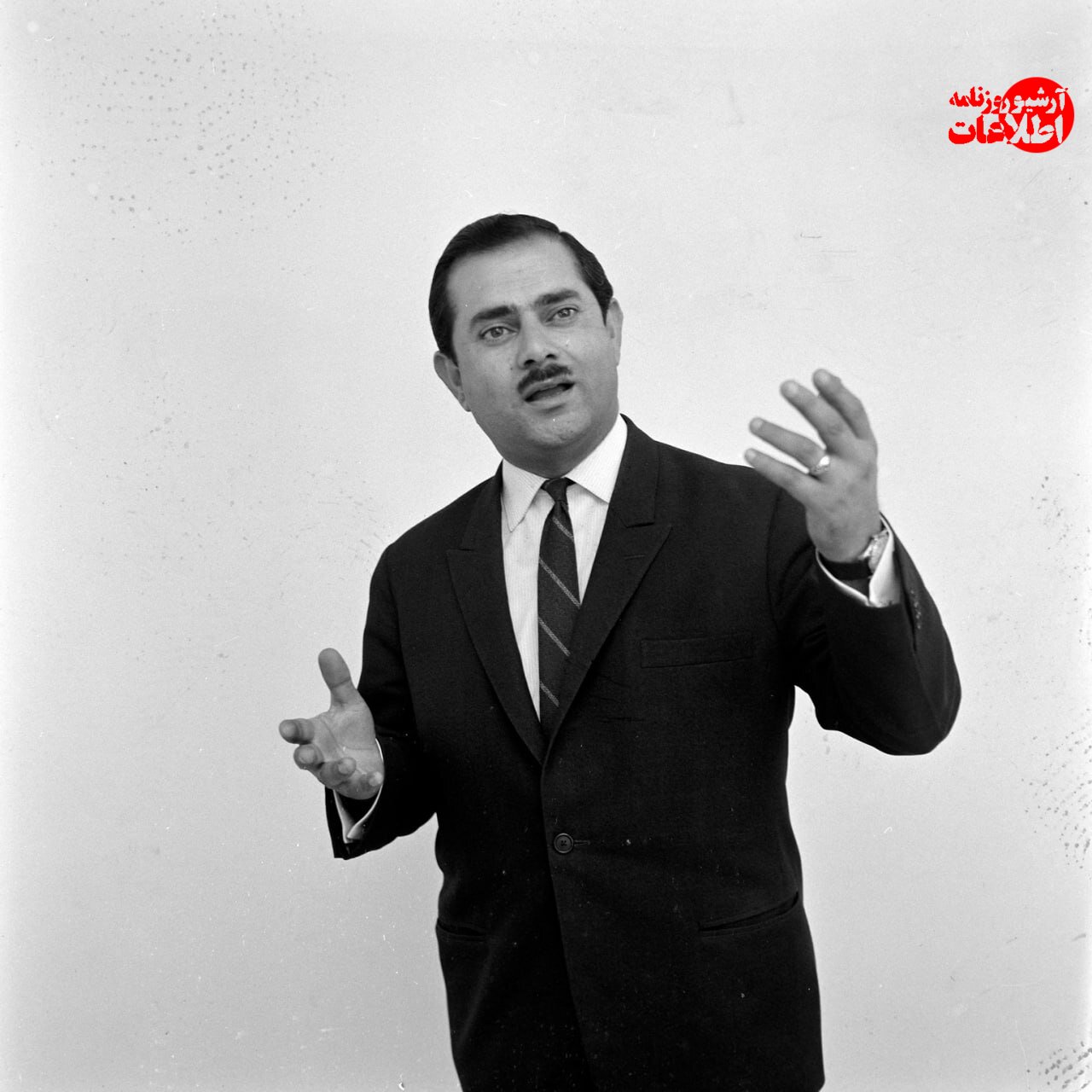
Nasser Masoudi: The Voice of Gilan and a Legacy of Iranian Music

In Iranian music, there have always been singers whose voices became symbols of their homeland. Historical examples can be seen in the Qajar era; Eghbal Sultan, who represented the grandeur of Azerbaijani music, or Taj Isfahani, who conveyed the authentic voice of Isfahan. Nasser Masoudi also held such a position; his voice was a symbol of Gilan, while he also managed to achieve national fame. In Gilan before him, Master Ahmad Ashurpur was present, but due to his long residence outside Iran, he did not have continuous activity. In contrast, Masoudi, through his constant presence, introduced the voice of Gilan to all of Iran.

In those years, radio stations were only active in Tehran. Starting in 1955, radio transmitters began operating in Rasht; although no archive of them remains today, those high-quality tapes were the first communication bridge between Masoudi’s voice and audiences far from Gilan. Fortunately, eight years before Masoudi’s emergence, Master Abolhassan Saba came to Gilan for a one-year assignment and established a music school. He trained many students, and considering the culture of Gilan, there were no restrictions on teaching music. Even artists from this region were influenced by non-Iranian music. In such an environment, Masoudi grew up and, simultaneously with the establishment of Rasht Radio at the age of 20, took his first serious steps.

Masoudi had an extraordinarily sensitive ear; his auditory ability was such that he could accompany any type of music. The flexibility of his voice also allowed him to sing in various styles. He became known from around 1959–1960 and always considered himself indebted to Ahmad Ebadi, the great master of music. Alongside that, his admiration for great singers like Manouchehr Shafiei, Manouchehr Homayounpour, and Ghasem Jabli shaped his artistic path.

One of the important factors in Masoudi’s recognition was the gramophone record production industry. In the 1960s, these records were no longer luxury items and reached the general public. This caused the voices of singers, including Masoudi, to reach the widest range of audiences and brought him national fame.

Masoudi was one of the few singers who began his work in an ethnic-regional context with a local dialect and simultaneously attained the status of a singer of classical Persian music (Dastgahi). He managed to preserve both paths and achieve national popularity in local music. His works, whether in the form of local ballads or classical pieces, possess a special longevity.

Northern Iran has three cultural regions, connected by the green belt of forests, yet major cultural differences are observed among them:
Gorgan: With its Turkmen music, which has a unique flavor.
Mazandaran: With its extensive and rural music, whose roots are attributed to the Sassanian era.
Gilan: With great musical diversity, of which Masoudi was the representative of its urban music.

He managed to elevate the voice of Gilan to a national level and is recorded in the history of Iranian music as a symbol of a green and diverse region.
(Excerpted from the video magazine program “24” featuring Alireza MirAliNaghi)
Post a Comment

Required fields are marked *
*
*
Your email is never shared.

Nasser Masoudi: The Voice of Gilan and a Legacy of Iranian Music

In Iranian music, there have always been singers whose voices became symbols of their homeland. Historical examples can be seen in the Qajar era; Eghbal Sultan, who represented the grandeur of Azerbaijani music, or Taj Isfahani, who conveyed the authentic voice of Isfahan. Nasser Masoudi also held such a position; his voice was a symbol of Gilan, while he also managed to achieve national fame. In Gilan before him, Master Ahmad Ashurpur was present, but due to his long residence outside Iran, he did not have continuous activity. In contrast, Masoudi, through his constant presence, introduced the voice of Gilan to all of Iran.

Farhad Poupel: The Voice of the Shahnameh in the Orchestras Around the World

In an era when almost no trace of contemporary Iranian music can be heard in international concert halls, except (so-called!) avant-garde works that owe their existence solely to the fashionable slogans of the “pseudo-intellectual” crowd who have seized the already meager resources for performing classical music from the true artists of the field, the numerous performances of Farhad Poupel’s works shine as a ray of hope for lovers of sincere musical art. Without resorting to trendy slogans, he has kept the flame of Iranian classical music alive purely through the power of his artistry.

From Past Days…

The Structure of Kurdistan Daf (II)

With its simple physical structure and captivating sound, the Daf never belonged to a particular culture or location, and every nation had different usages for this instrument considering their dominant customs and traditions.

A combination of technique and musicality in the fingers of a pianist

In the world of classical music, the position of soloist has always been exceptional. Apart from the technical ability that many orchestral musicians also have, the soloist must also have a special power to be able to present a different and unique perspective of a piece. The soloist must maintain its special power of expression not only in solo roles but also when interacting with the orchestra.

History’s Impact on Evaluating a Work of Art

With this description, we have automatically included a criterion called “History”, Until we know the time of the creation of a work of art, we cannot judge whether it has been easy to create or not. Suppose that, in a historical study, we find a musical work that is similar in compositional techniques (including form, melody, context, and orchestration) to a minor work of the nineteenth century; however, our research proves that, this work dates back to 200 years prior to that date. Can we still consider this work insignificant? Definitely not! So this is where the first use of history-based judgment comes into play.

New Technique for Playing Classical Guitar (I)

Joint application of the two techniques of “Lip” and “Nose” could be effectively applied for hearing and playing far-away intervals, by the Classical Guitar. Before this, a Classical Guitar player had to waive playing intervals not possible with the left hand, and had to replace or eliminate some notes, making it possible to play such intervals; specifically the capability of the left hand of the musician, was also a factor in such a selection. These methods are hereby illustrated by photographs and a video-file, in order to provide optimum comprehension of applying these methods, invented by the author; specifically the “Lip” technique, which is considered to be a more significant technique, emphasized by the author.

A year without Mohsen Ghanebasiri

The year 1396 (21 March 2017-20 March 2018) was the most sorrowful year for HarmonyTalk journal. One month after holding HarmonyTalk’s 13th establishment anniversary in Mohsen Ghanebasiri’s house in Tehran in April 2017, he untimely passed away. Mohsen Ghanebasiri was the prominent HarmonyTalk author.

Iranian Fallacies – Global Performance

One of the most important criteria for measuring the quality of a piece of classical music is number of times the piece has been performance by different ensembles and orchestras in different eras. This belief has become so pervasive in some societies, such as Iranian society, that it is considered the only criterion for measuring the quality of a piece of classical music.

Non-profit “Microtona” Project Released

Microtona is a sixty-eight-page Booklet with personal comments by the contributing microtonal artists. The booklet also includes a DVD which consists of 8 original video tracks and 9 original audio tracks. The project is an international one featuring unpublished pieces by composers from Iran, Japan, U.S., France, Austria, Germany and Belgium.

Polyphony in Iranian Music (I)

Despite the fact that Iranian folk music (regional music of Iran), like the Radif of Iranian traditional music, is monophonic and follows heterophony in principal, we experience polyphonic forms, albeit, majorly unconscious.

Developments in Iranian Music Since Qajar Era (I)

At the end of the Qajar era and as Iran entered the power transition period, known as the constitutional era, the Iranian music went through a lot of changes. These changes gained momentum as the students and followers of Ali Naqi Vaziri’s entered the musical scene. These changes greatly influenced designs of instruments, playing methods, singing, composing, etc.

Behzad Abdi’s opera Rumi was physically released by Naxos

Composing a traditional Iranian opera using the Iranian modal system, dastgāh, has always been my dream. I first approached this by composing an opera called Ashura followed by the operas Rumi and Hafez. I believe that in order to attract an international audience for Iranian opera, it is essential to fuse dastgāh with Western classical forms.