In Iranian music, certain singers have become emblematic of their homelands through their distinctive voices. Historical figures such as Eghbal Sultan, who epitomized the grandeur of Azerbaijani music, and Taj Isfahani, who conveyed the authentic essence of Isfahan, serve as notable examples from the Qajar era. Nasser Masoudi occupies a similar position; his voice emerged as a symbol of Gilan while also achieving national acclaim. Before him, Master Ahmad Ashurpur represented Gilan’s musical landscape, but his extended residence outside Iran limited his continuous engagement in the music scene. In contrast, Masoudi’s consistent presence allowed him to introduce the voice of Gilan to audiences across Iran.
Tag Archives: Nasser Masoudi
Latest posts
- Parva, Iranian Singer, Passes Away!
- Iraj Passes Away!
- Sohrab Pournazeri Becomes a Member of the GRAMMY Academy
- Shapour Rahimi Passes Away
- ShirMohammad Espandar Passes Away
- Jamshid Chemirani Passes Away
- Book “Iranian modal system (Dastgah music) modes” Published
- Transition to Enlightenment: Six Lectures on Mozart’s String Quartets (5)
- Nasser Masoudi: The Voice of Gilan and a Legacy of Iranian Music
- Farhad Poupel: The Voice of the Shahnameh in the Orchestras Around the World
- Five Major Myths About Mozart’s Life
- Bahma Rajabi Passed Away!
From Past Days…

Jamshid Andalibi passed away!
Jamshid Andalibi, one of the most famous ney players in Iran, passed away on the fifteenth of Esfand, 1402, at the age of 66 due to a heart attack at his private residence. Andalibi was a member of a family that had a significant presence in the field of Iranian music in the sixties and…
Read More

Iranian Fallacies – Composition and Arrangement
In the tradition of classical music, it is generally tried to use the same technical terms related to music in all countries. Even in the cultures in which native terms exist to refer to musical terms, usually the better known universal terms are employed.

The 4th Iranian Festival of Music Websites and Weblogs
The 4th Iranian Festival of Music Websites and Weblogs was held in Niavaran Cultural Center, in Tehran, Iran on Feb. 28th, 2015. The initiator of the festival was Sajjad Pourghanad, Iranian music writer, researcher, founder of the festival and Persian setar and tar player.

A year without Mohsen Ghanebasiri
The year 1396 (21 March 2017-20 March 2018) was the most sorrowful year for HarmonyTalk journal. One month after holding HarmonyTalk’s 13th establishment anniversary in Mohsen Ghanebasiri’s house in Tehran in April 2017, he untimely passed away. Mohsen Ghanebasiri was the prominent HarmonyTalk author.
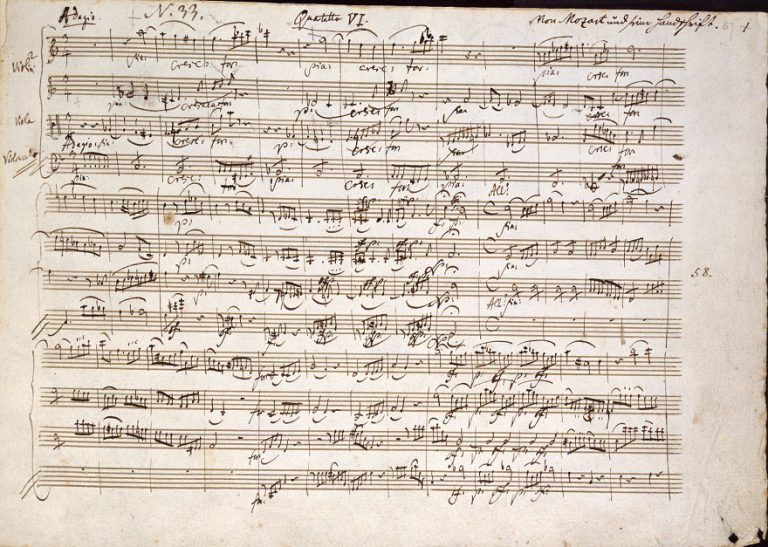
Transition to Enlightenment: Six Lectures on Mozart’s String Quartets (5)
The late 18th century was marked by profound societal changes across Europe, characterized by the rise of the bourgeoisie and the reshaping of musical patronage. Composers like Mozart responded to these shifts by adapting their compositional styles to align with the tastes and sensibilities of the emerging middle class. This article seeks to explore this phenomenon through an analysis of Mozart’s K. 499 quartet, also known as the “Hoffmeister” quartet, and his Prussian quartets, alongside the works of his contemporaries. By examining the evolution of the string quartet genre within the context of changing social structures and aesthetic preferences, this study aims to shed light on the dynamic relationship between music and society.
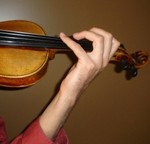
Principles of Violin Playing (II)
Since for playing violin, it’s necessary that the player’s palms and fingers be inclined toward the fingerboard, therefore, the player, while bringing up his hand, should turn it toward the fingerboard.

Last Year under the Light of Music
Almost three months into the new Iranian year (starting March 21), it is still not too late to have a look at the last year and the challenges that the musicians faced. The following article was published on the first day of the New Year in the Persian edition of the HarmonyTalk journal.

Avaye Naerika Percussion Orchestra
Avaye Naerika Percussion Orchestra is an Iranian percussion orchestra featuring 40 lady percussionists. The Orchestra was established as Iran’s largest all-female percussion orchestra in 2008 by Ms. Minoo Rezaei under the title Naerika Percussion Orchestra and changed its name to Avaye Naerika in 2017.
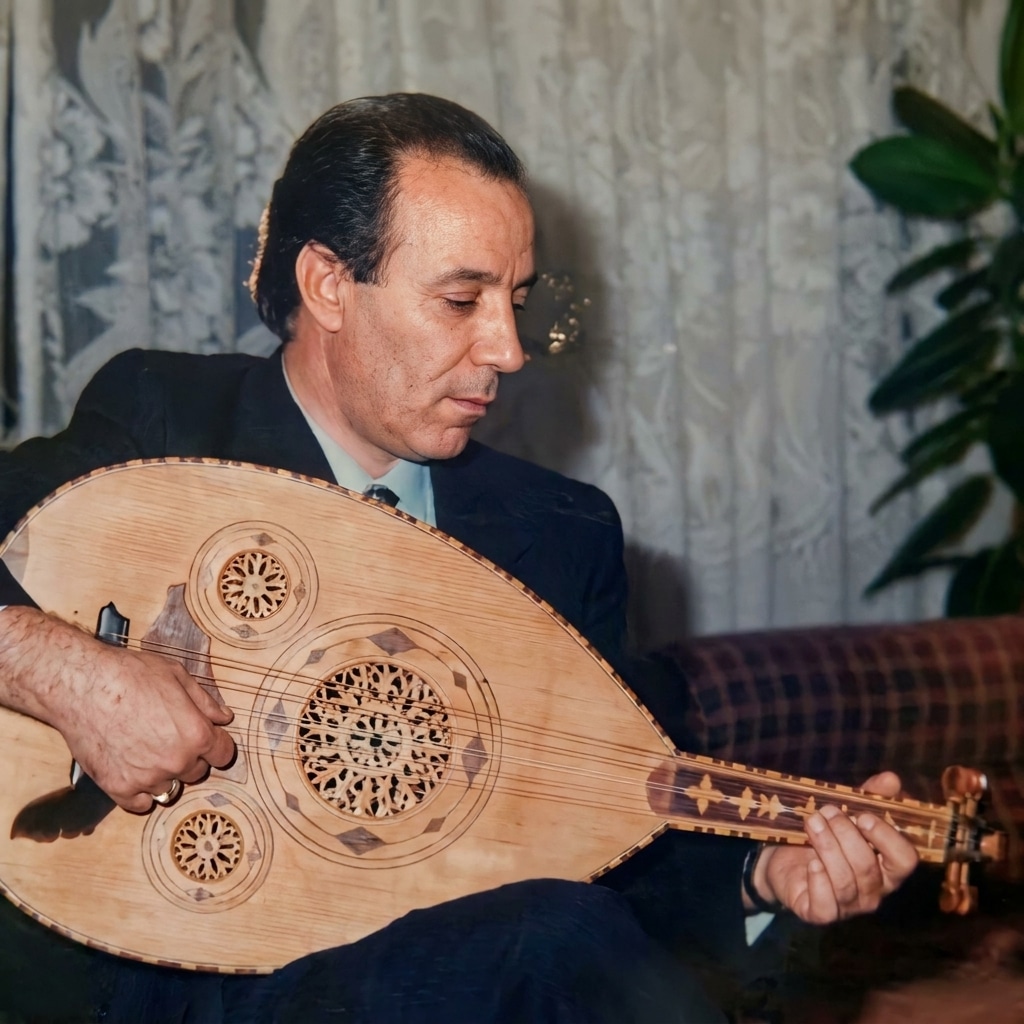
Shapour Rahimi Passes Away
Shapour Rahimi, oud player, vocalist, and former director of the Center for the Preservation and Propagation of Music, passed away on June 24, 2026, at the age of 79, after a period of illness. This veteran artist had been hospitalized at Aram Hospital in Karaj on June 20, 2026, due to a deterioration in his general health.
A Persian Nocturne for Piano
A Night in a Persian Garden is the name of a Nocturne composed by the Persian (Iranian) contemporary composer Behzad Ranjbaran. This Nocturne, published recently by the Theodore Presser Company in the US, was performed for the first time in 2002 in New York City by the young Persian pianist Soheil Nasseri and has enjoyed many performances by other pianists.