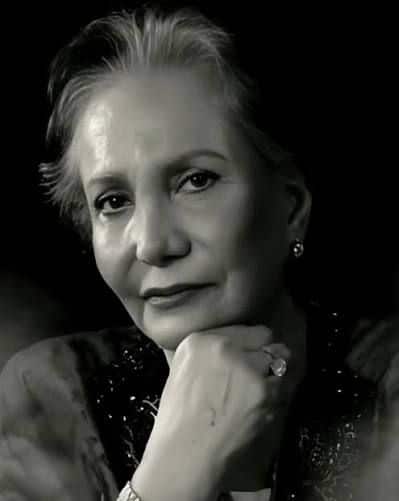
Parva, a singer of Iranian music, has passed away after a period of illness. In recent years, she had been residing in both Iran and Austria.
Parva, whose real name was Masoumeh Shahparvari, was born on June 5, 1949, in Tehran. She began her artistic career in 1969 with performances at the Youth Palace (Kakh-e Javanan). She subsequently collaborated with Iran’s Educational Television and in 1975 joined the National Iranian Radio and Television as a staff artist.
During her professional career, she collaborated with composers and lyricists such as Bozorg Lashkari, Hossein Samadi, Anoushirvan Rouhani, Mohammad-Ali Bahmani, Karim Fakour, Touraj Negahban, and Hossein Monzavi.
One of her best-known works is the composition “Mowsem-e Gol” (Season of Flowers), with lyrics by Esmaeil Navab-Safa and based on a Kurdish melody recreated by Mojtaba Mirzadeh, which was warmly received by audiences.
Parva’s professional career came to a halt after the 1979 revolution, when female singing was banned in Iran. However, in the following years, she studied and later taught classical Persian vocal music (āvāz-e dastgāhi) under the tutelage of Parisa and Masoumeh Mehrali, and remained active in recording and teaching this musical tradition.
During her periods of residence in Austria and Iran, she collaborated with artists including Mohammad Shams, Shahriar Fariyousefi, Hassan Nahid, Fazlollah Tavakkol, Kambiz Roshanravan, Ali Derakhshan, Houshang Farahani, Mohammad-Reza Amirghasemi, Behzad Abdi, Babak Shahraki, Alireza Daryaei, and Sadjad Pourghanad. Some of these works have been released.
Among the most significant of these is the album *”Bahār rā Bāvar Kon”* (Believe in Spring), composed by Mohammad Shams, which was released on CD and features pieces for symphony orchestra, Persian instruments, choir, and solo vocals.
Parva’s vocal classes ceased in her later years as she battled cancer, during which time she generally resided in Austria.
In the final months of her life, despite her illness, she was actively planning the release of her recorded works and organizing a concert led by Nezhat Amiri, pursuing these efforts with great seriousness.
Her colleagues and friends have always spoken admiringly of her indomitable and steadfast spirit, recalling how she would come to the studio with a walker, even at the height of her cancer and while undergoing chemotherapy in Tehran, and record her vocals with resolve and authority.
A large portion of her recordings from recent years has yet to be released from the studios and awaits publication.