Parva, a singer of Iranian music, has passed away after a period of illness. In recent years, she had been residing in both Iran and Austria.
Tag Archives: parva
Latest posts
- Parva, Iranian Singer, Passes Away!
- Iraj Passes Away!
- Sohrab Pournazeri Becomes a Member of the GRAMMY Academy
- Shapour Rahimi Passes Away
- ShirMohammad Espandar Passes Away
- Jamshid Chemirani Passes Away
- Book “Iranian modal system (Dastgah music) modes” Published
- Transition to Enlightenment: Six Lectures on Mozart’s String Quartets (5)
- Nasser Masoudi: The Voice of Gilan and a Legacy of Iranian Music
- Farhad Poupel: The Voice of the Shahnameh in the Orchestras Around the World
- Five Major Myths About Mozart’s Life
- Bahma Rajabi Passed Away!
From Past Days…
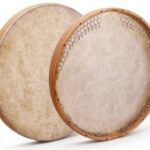
The Structure of Kurdistan Daf (V)
ehrouz Mohammadi, “Daf and its feasts in Ghaderieh’s Tekyeh” mentions that the outer thickness of arch where studs are located, [is] between one to one and a half centimeters (Mohammadi, 2001: 12). The thickness of arch should be gradually reduced from the installation place of rings to skin (Avazeh of Daf) to create a high volume, clear sound from Daf; also, the connection of arch to skin should not be less than one millimeter, because in this case the skin will be torn due to the sharpness of the wood (Mogharab Samadi, 2009: 79-78). The thickness of wood on the skin side is about two to three millimeters (Tohidi, 2002: 79).
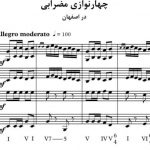
Inefficiency of some chords and harmonization systems in Iranian music
Discussions and research have been conducted on the harmonization of “dastgah” and melodies in Iranian music, and several books have been published on this topic, including “Armenian Music of Iran” by Ali Naghi Vaziri, “Harmony of Iranian Music” by Farhad Fakhreddini, and “Harmony of Iranian Music” by Ali Ghamssari. A master’s thesis titled “Presenting a Solution for Harmonizing Based on the Structure of Tritone Intervals” was written by Atefeh EinAli in 2014. Additionally, the invention and use of “Even Harmony” by Morteza Hannaneh should be mentioned.

Polyphony in Iranian Music (V)
In addition to the above-mentioned, polyphony can be also formed when a melody is performed by several singers in different ambiances or different sound registers according to their physiologic abilities. An example of this has been performed in rituals of Khanqah of Ghaderi darawish of Mahabad[i].

Harmony in the Iranian Music (II)
One of his works was the translation of Harmony, which was carried out with the help of Mozayyan al-Dowleh, and included a pamphlet based on which he used to teach the subject to the students of the school of music; the pamphlet was never published. It was, in fact, a kind of simple harmony for the piano with no quadriads, it rather featured the engagement of both the right hand and the left hand which was being taught at the music school for the first time. Salar-Mo’azez also composed military marches and hymns for schools, which he harmonized to be performed and piano. Likewise, he used to compose for military orchestras.
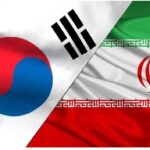
Is the Iranian National Anthem a Copy? (I)
The alleged similarity between the Iranian and South Korean National Anthems has been a matter of discussion among musicians in Iran for several years. Earlier in 2021, the issue was taken to the media again with not only claims that the anthem is very similar to another song but also the suggestion that its musical content should draw more on the Iranian national music. Some even went to the extent to suggest replacing it with the song “O, Iran” composed by the late Rouhollah Khaleghi. Before delving more into the main issue, it would not go amiss to consider some technical characteristics of the song “O, Iran” composed in 1944.
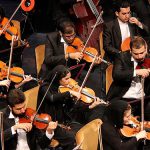
The response of the fired musicians to the interview of the managing director of Rudaki Foundation
Following an interview by Mehdi Salem, the director of the Rudaki Foundation, with the “Our Music” website, a response from the dismissed musicians was published in response to this conversation, which you read:
A Look at Ali Tajvidi’s Manifold Musical Activities (I)
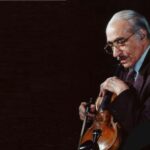
Ali Tajvidi (1920 – 2004), one of the most prominent Iranian musicians, passed away sixteen years ago. He was one of the most distinguished Iranian artists. To specify one of the fields in which he was unique, one can refer to Tasnif composition. A brief review of his manifold musical activities is presented below.
Motherland Orchestra Broke the Spell of the Covid-19 Restrictions
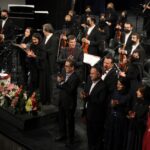
The Motherland Orchestra staged the first concert since the outbreak of the pandemic under the baton of Nezhat Amiri. The orchestra went on stage on December 23-24, 2021 in memory of Rouhollah Khaleghi and Golnoush Khaleghi at Vahdat Hall, Tehran, Iran. Since the pandemic outbreak, concerts were held online and restrictions were imposed on in-person concerts.
A Look at Ali Tajvidi’s Manifold Musical Activities (II)
Tajvidi thought of studying harmony and orchestration with Houshang Ostvar (who was eight years younger than him) at a time when he had gained a reputation among musicians. His humbleness, making him willing to kneel before the scholars at any age and position, became the key to his scientific success. After this period, Tajvidi made some of his works polyphonic, the most prominent of which is “Burn” set to a poem by Abdullah Ulfat. However, his ability to make his works polyphonic was not so great to make him self-sufficient; so he depended on musicians such as Farhad Fakhreddini, Fereydoun Naseri, Kambiz Roshanravan, Fereydoun Shahbazian and Morteza Hananeh for the arrangement of his compositions.
Celebrating 20 Years of Harmony Talk’s Journey: Resilience, Evolution, Honoring the Legacy and Navigating Future Growth
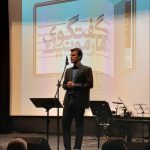
In a momentous celebration of two decades, the “Arasbaran Cultural Center” was the stage for the 20th anniversary of “Harmony Talk”, an online journal that has become a cornerstone in the music community. Sadjad Pourghanad, the editor-in-chief, delivered a speech that resonated with gratitude and vision.