Tafazzoli: Monolingualism drives music into obscurity (1)

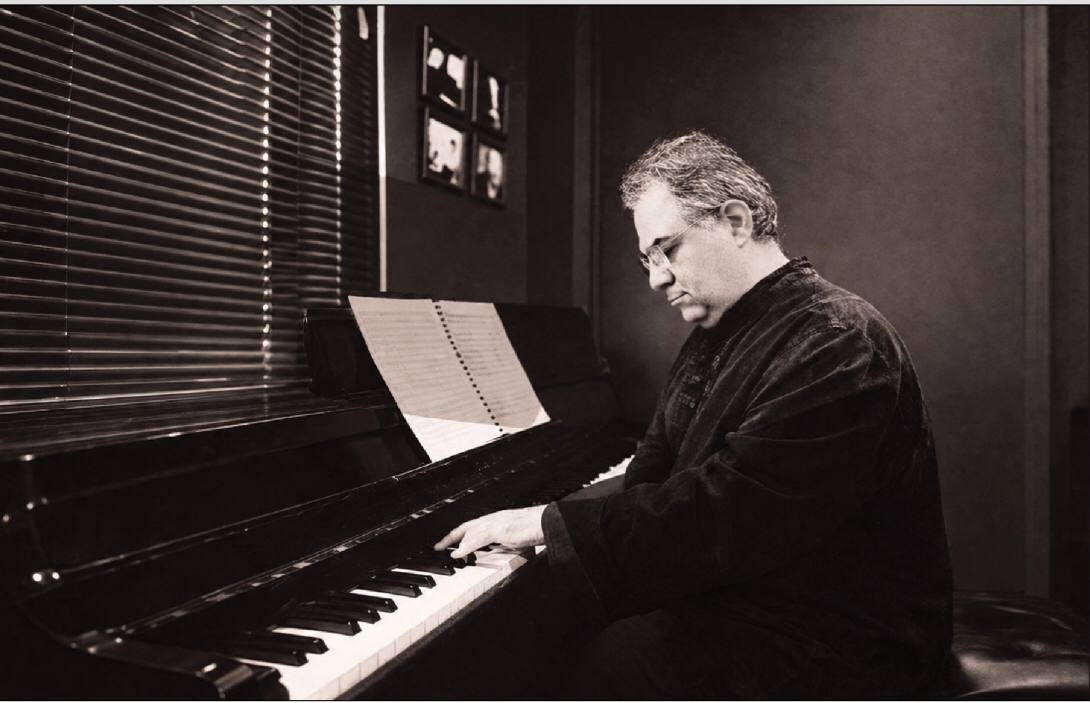
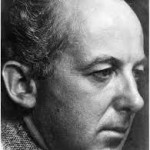
Between the year 1403 (2024–25) and today, the name of Mohammadreza Tafazzoli—composer and faculty member of the Faculty of Music at the University of Art, Iran—has appeared several times as a composer with various orchestras. In 1403, part of his suite *Dena* was performed by the National Orchestra; in 1404, the same work was performed in full by the Mitra Orchestra, and in the same year, his symphony *Vaghouyeha* (*Murmurings*) was staged with the Tehran Symphony Orchestra. Recently, in Mordad of the current year, we witnessed the performance of *Elegy* for string orchestra by the Vivo Orchestra, composed by him. Tafazzoli has tested diverse languages in his works—from the neotonal and at times atonal language of the twentieth century to a fully tonal language. But in most of his works, the combination of Iranian melodies with the neotonal language of the first half of the twentieth century is most visible. Below, on the occasion of the staging of *Elegy* by the Vivo Orchestra, we spoke with him about his activities and the atmosphere of his works. What follows is the text of that conversation.

At the beginning of this conversation, please tell us what musical works you currently have in hand, and how the performance of works and the holding of workshops are progressing.
At present, I am working on the final revision of the finale of String Quartet No. 2, titled *Tehran*, which after revision must be delivered to the performers for performance. Of course, since holding educational workshops is also one of my concerns, I had a workshop organized by the Scientific Association of Music at the University of Tehran—a workshop that was supposed to be held in Dey of last year, but due to the events of Dey and their aftermath and the war, its holding was delayed by about seven months. This workshop was held in three sessions and included an analysis of the form of Symphony No. 5 by three composers: Mahler, Sibelius, and Shostakovich. I am glad that I finally succeeded in holding it, although due to the current circumstances it had to be online. In the past few weeks, *Elegy* (a lament) for string orchestra was performed by the Vivo Orchestra under the baton of Ms. Paniz Faryousofi, alongside works by other Iranian composers including Mohammad-Saeed Sharifian, Mani Jafarzadeh, Hasan Rahimi, and several Western classical works by Handel, Tchaikovsky, and Elgar—a concert that was extended due to audience demand.

Please explain the atmosphere and features of your recent work, *Elegy*, which was staged by the Vivo Orchestra.
*Elegy* was written on commission from Ms. Paniz Faryousofi and is dedicated to her. Since this work was written for a broader spectrum of audiences rather than solely professional listeners of academic music, it explicitly uses a tonal language—so much so that in the concert brochure its title was given as “*Elegy in D minor*.”

You in a sense reflect national music in your works; in fact, the “Iranianness” of the music matters to you. What works have you composed so far with this concern?
Apart from specific national themes, it would not be bad to offer a preamble before answering this question. When I began my music studies in Tehran—that is, in the final years of the 1360s and also the early 1370s—the issue of identity was the main issue for composers. In such a way that all composers had this goal: that their work should *sound* “national,” and in fact this was the dominant discourse among Iranian composers and it existed. Among the composers who wrote orchestral works—Morteza Hannaneh, Ahmad Pejman, Hossein Dehlavi, Farhad Fakhreddini, Hossein Alizadeh, Kambiz Roshanravan, Hooshang Kamkar, Mohammadreza Darvishi, Mohammad-Saeed Sharifian, and others—each pursued this goal in some way. Despite the common goal, the categories of the musics were different, and this itself led to differences in the tone of the composers.

Post a Comment


Warning: Undefined variable $user_ID in C:\host-websites\harmonytalk.com\domains\en.harmonytalk.com\www\wp-content\themes\harmonytalk\comments.php on line 93
Required fields are marked *
*
*
Your email is never shared.

Tafazzoli: Monolingualism drives music into obscurity (1)

Between the year 1403 (2024–25) and today, the name of Mohammadreza Tafazzoli—composer and faculty member of the Faculty of Music at the University of Art, Iran—has appeared several times as a composer with various orchestras. In 1403, part of his suite *Dena* was performed by the National Orchestra; in 1404, the same work was performed in full by the Mitra Orchestra, and in the same year, his symphony *Vaghouyeha* (*Murmurings*) was staged with the Tehran Symphony Orchestra. Recently, in Mordad of the current year, we witnessed the performance of *Elegy* for string orchestra by the Vivo Orchestra, composed by him. Tafazzoli has tested diverse languages in his works—from the neotonal and at times atonal language of the twentieth century to a fully tonal language. But in most of his works, the combination of Iranian melodies with the neotonal language of the first half of the twentieth century is most visible. Below, on the occasion of the staging of *Elegy* by the Vivo Orchestra, we spoke with him about his activities and the atmosphere of his works. What follows is the text of that conversation.

Parva, Iranian Singer, Passes Away!

Parva, a singer of Iranian music, has passed away after a period of illness. In recent years, she had been residing in both Iran and Austria.

From Past Days…

Henry Cowell: “Persian Set”

Persian Set: Four Movements for chamber orchestra: Moderato; Allegretto; Lento; Rondo

Henry Cowell, one of the most innovative American composers of the 20th century, was born in 1897. Cowell and his wife visited Iran in 1956 and stayed there the whole winter, upon the invitation by the Iranian Royal Family, when he composed his album “Persian Set” in four movements for chamber orchestra. His composition is expressive of the characteristic quality of the Persian or the Iranian music.

Layla Ramezan, Iranian Pianist

Iranian pianist Layla Ramezan has always sought to create a connection between her Persian origin and the contemporary music which she encounters daily. Sound, phrasing, a particular sense of rhythm and a refined understanding of the “time of musical development” are the foremost qualities of her interpretations. Her musical and pianistic education began in Tehran at the age of 8 with Mostafa-Kamal Poortorab. Having moved to Paris and received a scholarship from Albert Roussel Foundation, she integrated the classes of Jean Micault and Devi Erlih at the Ecole Normale de Musique de Paris Alfred Cortot, where she received a Diplôme de Virtuosité in piano performance and chamber music.

Transition to Enlightenment: Six Lectures on Mozart’s String Quartets (3)

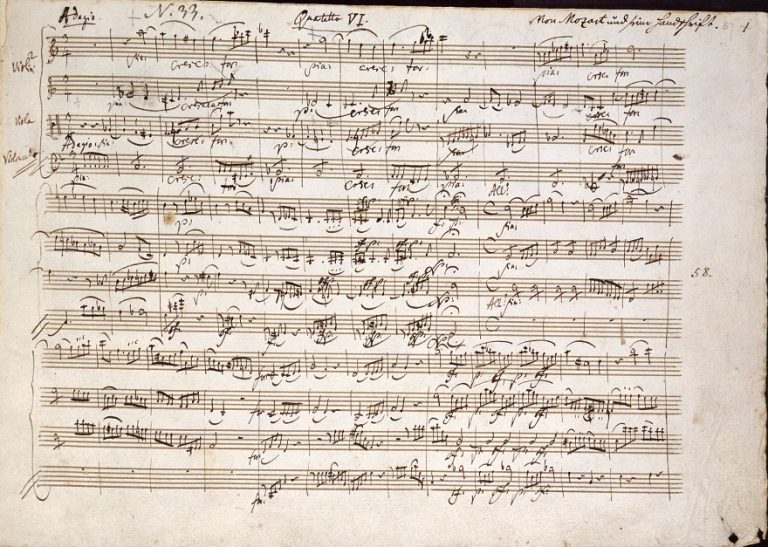
Wolfgang Amadeus Mozart, a musical prodigy of the Classical era, was deeply influenced by the intellectual currents of the Enlightenment. His exposure to Enlightenment ideas was multifaceted, shaped not only by the cultural milieu of his time but also by the relationships within his family and his own interactions with prominent figures of the Enlightenment. This exploration will delve into Mozart’s acquaintance with Enlightenment ideas through his father’s relationships and his own encounters with influential personalities of the era, including Christian Fürchtegott Gellert, Baron Melchior Grimm, Madame d’Epinay, and Joseph von Sonnenfels. Additionally, the essay will examine the impact of Joseph II’s reforms on Mozart’s life and artistic endeavors.

Ashoura Opera

Ashura Opera was composed by Behzad Abdi, the Iranian composer, in 2008 based on librettos compiled by Behrouz Gharib. The main source for the libretto is poems by Mohtasham Kashani, a sixteenth century Iranian poet.

Gholam Reza Khan Minbashian: a pioneer in Iranian music (II)

Gholamreza Khan Minbashian taught courses such as organology, orchestration of military music and harmony based on the books which were translated from French into Persian with the help of Aliakbar Mozayyan-o-Dolleh (1846-1932).

Principles of Playing Violin (VI)

B. applying force: the force needed for putting finger on finger board is applied through finger tips and using the rest of hand set especially wrist is not allowed. To practice this, it is possible to hold violin without the bow and throw the fingers on the finger board from 1-2cm distance; apply force only through finger tips.

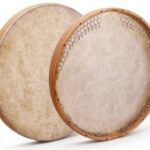
The Structure of Kurdistan Daf (III)

“Our ancestors believe powerful blows upon the Daf scatters evil spirits of disease and distress to create a clean and holy space filled with health and prosperity. Adding tools to Daf increases this instrument’s purification, spreading, and summoning powers of evil forces and goddesses. Daf was mostly depicted by red, color of blood, in ancient times or sometimes it was depicted with green, the color of plants and nature. There were probably some mysterious designs painted upon the wooden body and frames of these instruments just like today” (Pahlavan, 2013: 44).

Musical Sense or Technique?

One of the most popular terms used by Iranian instrumentalists is the existence or a lack of musical “sense”. Both musicians and fans of music consider having “sense” while playing music as an important principle to the extent that they use it vis-a-vis having technique.

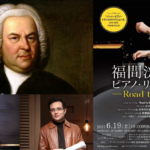
Farhad Poupel’s piece, Road to Bach, performed at Suntory Hall

On June 19, 2021 , young Iranian composer and pianist, Farhad Poupel’s piece, Road to Bach, was performed at the prestigious Suntory Hall by the great Japanese pianist, Kotaro Fukuma. The piece was commissioned by Kotaro Fukuma to have its world premiere in Suntory Hall during a concert by the same name.

Three singers in one larynx

Sima Bina (b. 1945) is a unique singer among the singers of Golha radio programmes which were broadcast on Iranian National Radio for 23 years from 1956 to 1979. She received her first lessons in music from her father who was a poet, a musician and the most important supporter of Sima’s cultural activities.