Tafazzoli: Monolingualism drives music into obscurity (1)

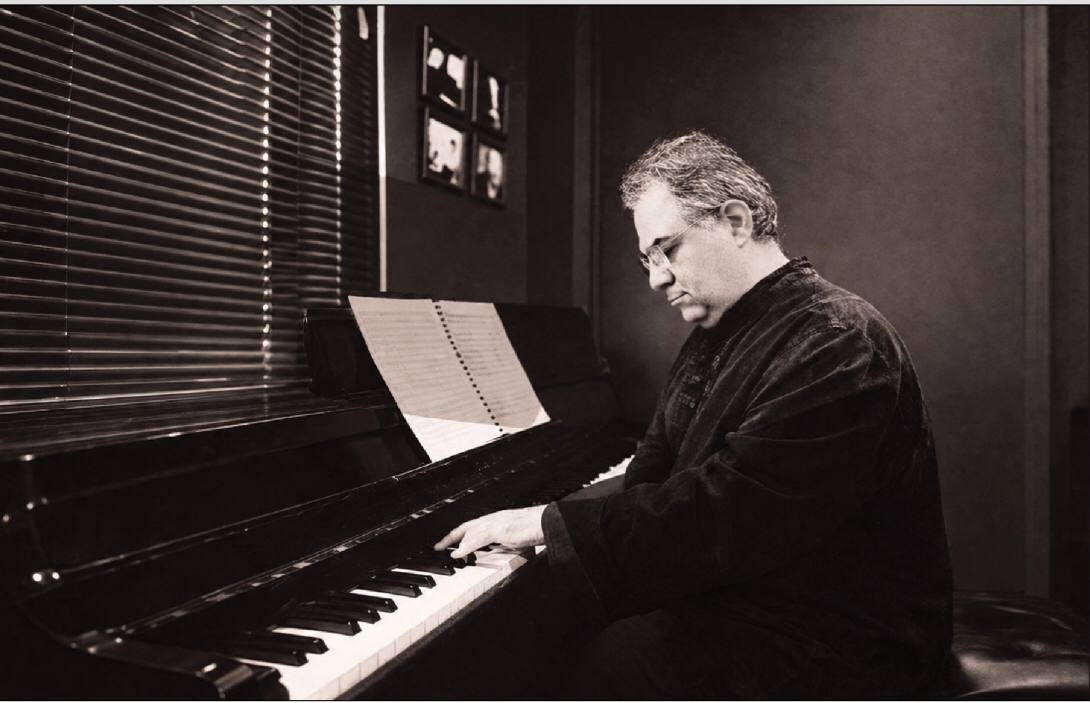
Between the year 1403 (2024–25) and today, the name of Mohammadreza Tafazzoli—composer and faculty member of the Faculty of Music at the University of Art, Iran—has appeared several times as a composer with various orchestras. In 1403, part of his suite *Dena* was performed by the National Orchestra; in 1404, the same work was performed in full by the Mitra Orchestra, and in the same year, his symphony *Vaghouyeha* (*Murmurings*) was staged with the Tehran Symphony Orchestra. Recently, in Mordad of the current year, we witnessed the performance of *Elegy* for string orchestra by the Vivo Orchestra, composed by him. Tafazzoli has tested diverse languages in his works—from the neotonal and at times atonal language of the twentieth century to a fully tonal language. But in most of his works, the combination of Iranian melodies with the neotonal language of the first half of the twentieth century is most visible. Below, on the occasion of the staging of *Elegy* by the Vivo Orchestra, we spoke with him about his activities and the atmosphere of his works. What follows is the text of that conversation.

At the beginning of this conversation, please tell us what musical works you currently have in hand, and how the performance of works and the holding of workshops are progressing.
At present, I am working on the final revision of the finale of String Quartet No. 2, titled *Tehran*, which after revision must be delivered to the performers for performance. Of course, since holding educational workshops is also one of my concerns, I had a workshop organized by the Scientific Association of Music at the University of Tehran—a workshop that was supposed to be held in Dey of last year, but due to the events of Dey and their aftermath and the war, its holding was delayed by about seven months. This workshop was held in three sessions and included an analysis of the form of Symphony No. 5 by three composers: Mahler, Sibelius, and Shostakovich. I am glad that I finally succeeded in holding it, although due to the current circumstances it had to be online. In the past few weeks, *Elegy* (a lament) for string orchestra was performed by the Vivo Orchestra under the baton of Ms. Paniz Faryousofi, alongside works by other Iranian composers including Mohammad-Saeed Sharifian, Mani Jafarzadeh, Hasan Rahimi, and several Western classical works by Handel, Tchaikovsky, and Elgar—a concert that was extended due to audience demand.

Please explain the atmosphere and features of your recent work, *Elegy*, which was staged by the Vivo Orchestra.
*Elegy* was written on commission from Ms. Paniz Faryousofi and is dedicated to her. Since this work was written for a broader spectrum of audiences rather than solely professional listeners of academic music, it explicitly uses a tonal language—so much so that in the concert brochure its title was given as “*Elegy in D minor*.”

You in a sense reflect national music in your works; in fact, the “Iranianness” of the music matters to you. What works have you composed so far with this concern?
Apart from specific national themes, it would not be bad to offer a preamble before answering this question. When I began my music studies in Tehran—that is, in the final years of the 1360s and also the early 1370s—the issue of identity was the main issue for composers. In such a way that all composers had this goal: that their work should *sound* “national,” and in fact this was the dominant discourse among Iranian composers and it existed. Among the composers who wrote orchestral works—Morteza Hannaneh, Ahmad Pejman, Hossein Dehlavi, Farhad Fakhreddini, Hossein Alizadeh, Kambiz Roshanravan, Hooshang Kamkar, Mohammadreza Darvishi, Mohammad-Saeed Sharifian, and others—each pursued this goal in some way. Despite the common goal, the categories of the musics were different, and this itself led to differences in the tone of the composers.
Post a Comment


Warning: Undefined variable $user_ID in C:\host-websites\harmonytalk.com\domains\en.harmonytalk.com\www\wp-content\themes\harmonytalk\comments.php on line 93
Required fields are marked *
*
*
Your email is never shared.

Tafazzoli: Monolingualism drives music into obscurity (1)

Between the year 1403 (2024–25) and today, the name of Mohammadreza Tafazzoli—composer and faculty member of the Faculty of Music at the University of Art, Iran—has appeared several times as a composer with various orchestras. In 1403, part of his suite *Dena* was performed by the National Orchestra; in 1404, the same work was performed in full by the Mitra Orchestra, and in the same year, his symphony *Vaghouyeha* (*Murmurings*) was staged with the Tehran Symphony Orchestra. Recently, in Mordad of the current year, we witnessed the performance of *Elegy* for string orchestra by the Vivo Orchestra, composed by him. Tafazzoli has tested diverse languages in his works—from the neotonal and at times atonal language of the twentieth century to a fully tonal language. But in most of his works, the combination of Iranian melodies with the neotonal language of the first half of the twentieth century is most visible. Below, on the occasion of the staging of *Elegy* by the Vivo Orchestra, we spoke with him about his activities and the atmosphere of his works. What follows is the text of that conversation.

Parva, Iranian Singer, Passes Away!

Parva, a singer of Iranian music, has passed away after a period of illness. In recent years, she had been residing in both Iran and Austria.

From Past Days…

A combination of technique and musicality in the fingers of a pianist

In the world of classical music, the position of soloist has always been exceptional. Apart from the technical ability that many orchestral musicians also have, the soloist must also have a special power to be able to present a different and unique perspective of a piece. The soloist must maintain its special power of expression not only in solo roles but also when interacting with the orchestra.

Three singers in one larynx

Sima Bina (b. 1945) is a unique singer among the singers of Golha radio programmes which were broadcast on Iranian National Radio for 23 years from 1956 to 1979. She received her first lessons in music from her father who was a poet, a musician and the most important supporter of Sima’s cultural activities.

Motherland Orchestra Broke the Spell of the Covid-19 Restrictions

The Motherland Orchestra staged the first concert since the outbreak of the pandemic under the baton of Nezhat Amiri. The orchestra went on stage on December 23-24, 2021 in memory of Rouhollah Khaleghi and Golnoush Khaleghi at Vahdat Hall, Tehran, Iran. Since the pandemic outbreak, concerts were held online and restrictions were imposed on in-person concerts.

From the Last Instrumentalist to the First Composer (II)

Rouhollah Khaleghi was the master of composing beautiful melodies. He was the premier of the course of history which was first established by Ali Naghi Vaziri and which improved the Iranian music from simply a gathering music to the classical music of the country. First efforts to compose independent and instrumental music can be also traced in Khaleghi’s works.

Ali Rahbari’s collaboration with Naxos as a Composer

Concertino for Violin and Orchestra entitled Nohe Khan was composed by Ali (Alexander) Rahbari while he was studying music in Vienna in 1972. This piece was composed having in mind the Ashoura events and inspired by the music which is used during the Ashoura ceremonies. The piece was first performed and recorded by Bijan Khadem…
Read More »

A Persian Nocturne for Piano

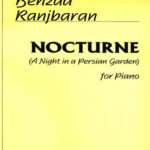
A Night in a Persian Garden is the name of a Nocturne composed by the Persian (Iranian) contemporary composer Behzad Ranjbaran. This Nocturne, published recently by the Theodore Presser Company in the US, was performed for the first time in 2002 in New York City by the young Persian pianist Soheil Nasseri and has enjoyed many performances by other pianists.

From the Last Instrumentalist to the First Composer (I)

Music as an art has its own special history; emergence of a singer, of an instrumentalist and then the emergence of the strong character of a composer covers three significant phases of the art of music. With the emergence of composer which was simultaneous with the emergence of the language of music, this art managed to offer a domain for criticism for its composer; a procedure which led to a magnificent variety and evolution in musical production. Even though the conflicts between singers and instrumentalists have not met their end in the Iranian society and while singers can achieve high, instrumentalists have yet to play behind curtains . In a special era, with the efforts of musicians such as Ali Naghi Vaziri (1887-1979) and Rouhollah Khaleghi (1906-1965), glimmers of a composing era started to glow bearing fruit in Khaleghi’s achievement as Iran’s first professional composer. Khaleghi made his reputation as a composer while Vaziri deserved to pioneer this path. By then Vaziri was well-known as a Tar player.

Ruggero Chiesa’s Legacy

Written by Peyman Shirali Translated by Mahta Mottaghi Since many years ago, I had the intention of writing an article on the Italian maestro Ruggero Chiesa and his musical life; but his ingenuity and the immense legacy, which is impressive for not only me, but also almost everyone who knows him properly, made it hard for me…
Read More »

Five Major Myths About Mozart’s Life

Wolfgang Amadeus Mozart, the renowned Austrian composer, is undoubtedly one of the greatest geniuses in the history of classical music. However, his life is surrounded by numerous myths and legends, some of which are not based on facts. This article explores five of the most common misconceptions about Mozart’s life.

Payam Taghadossi: Talented Iranian-Austrian Cellist

Payam Taghadossi (born in 1989) started his musical education at the age of 4 years with Monika Scherbaum in Bregenz (Austria). At the Conservatory Feldkirch he joined the class of Imke Frank and Martin Merker. Later he studied in Zurich (Switzerland) with Thomas Grossenbacher and Christian Proske, where he 2011 graduated as a Bachelor of Arts in Music Performance. Two years later as the student of Rafael Rosenfeld he received his Master of Arts in Music Performance diploma and later graduated as a Master of Arts in spezialized Music Performance in 2016 from the Hochschule für Musik Basel FHNW.