Iraj Passes Away!

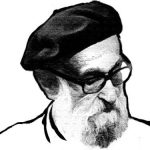
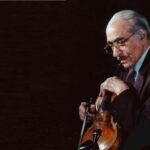
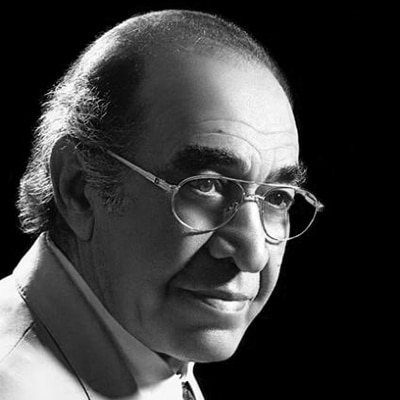
Iraj (Hossein Khajeh-Amiri), Legendary Iranian Vocalist, Passes Away at 94

Iraj (Hossein Khajeh-Amiri), born on January 1, 1933, in Natanz, and one of the most renowned figures in Iranian vocal music, passed away at the age of 94 after several months of illness. He was born into an artistic and cultivated family; his ancestor was a celebrated singer during the era of Nasser al-Din Shah Qajar, and his father, who himself possessed a fine voice and was well-versed in the radifs (modal systems) of Persian music, devoted years to training his son’s voice. In his early youth, Iraj also participated in Ta’ziyeh (religious passion plays) and learned the subtleties of vocal performance step by step from Ta’ziyeh performers who had mastered the radifs and modes.

In 1947, he entered the school of Abolhasan Saba and over two consecutive years completed his musical education under this prominent master. With Saba’s introduction, he gained entry to Radio Iran, where he performed with the orchestra of Ebrahim Mansouri. He later entered the Officers’ Academy. Since his simultaneous service in the gendarmerie imposed restrictions on his artistic activities, he adopted the stage name “Iraj” – which was originally his brother’s name – in order to continue his singing while adhering to official regulations.

The year 1957 marked a turning point in his artistic career: at the invitation of Davoud Pirnia, he joined the legendary radio program Golha (Flowers). His first collaboration was on an episode titled Barg-e Sabz-e 43 (Green Leaf 43), alongside Ali Tajvidi, Farhang Sharif, and Amir-Naser Eftekhah. This collaboration initiated a prolific period of his presence across various radio platforms.

In addition to performing a vast number of radio programs, Iraj also excelled in film songs and vocal pieces for cinema, to the extent that many prominent actors of the time, such as Fardin, Manouchehr Vosough, and others, lip-synced to his songs on screen. The first film featuring his work was Rowzaneh-ye Omid (Window of Hope), directed by Sardar Sagar Hindi, with lyrics by Javad Lashgari.

His range of artistic collaborations was remarkably broad and unique. He performed alongside greats such as Ali Tajvidi, Homayoun Khorram, Parviz Yahaghi, Habibollah Badiei, Asadollah Malek, Jalil Shahnaz, Lotfollah Majd, Farhang Sharif, Fereydoun Hafezi, Mehdi Takestani, Masoud Jamali, Akbar Mohseni, Mansour Nariman, Mahmoud Rahmani-Pour, Yousef Kamousi, Simin Agharazi, Emad Ram, Amir-Naser Eftekhah, Jahangir Malek, Abtin Ajlali, Hassan Kassai, Mohammad Mousavi, Hassan Nahid, Reza Varzandeh, Mansour Saremi, Majid Nahjai, Fazlollah Tavakkol, Mohammad Heydari, Ahmad Ebadi, Anoushirvan Rouhani, and many other instrumentalists and singers of his era. This extensive network attests to the deep respect he commanded among musicians, and he was widely praised and validated by his peers. Nevertheless, the greatest title ever recorded for him in the history of Iranian music is “Pahlavān-e Āvāz-e Irān” (The Champion of Iranian Song).

Iraj, who retired with the rank of colonel from the Road Police force, left behind a prolific artistic legacy of over two thousand vocal pieces, including songs, classical vocal renditions (āvāz), and instrumental-vocal compositions (tasnifs), performed across various programs over his career.

A funeral ceremony and farewell for Iraj Khajeh-Amiri, the celebrated vocalist of Iranian music, will be held at 10:00 AM on Friday, August 14, 2026, in front of Vahdat Hall. Following the ceremony, his remains will be transferred to the Artists’ Section of Behesht-e Zahra Cemetery for burial.
Post a Comment


Warning: Undefined variable $user_ID in C:\host-websites\harmonytalk.com\domains\en.harmonytalk.com\www\wp-content\themes\harmonytalk\comments.php on line 93
Required fields are marked *
*
*
Your email is never shared.

Parva, Iranian Singer, Passes Away!

Parva, a singer of Iranian music, has passed away after a period of illness. In recent years, she had been residing in both Iran and Austria.

Iraj Passes Away!

Iraj (Hossein Khajeh-Amiri), born on January 1, 1933, in Natanz, and one of the most renowned figures in Iranian vocal music, passed away at the age of 94 after several months of illness. He was born into an artistic and cultivated family; his ancestor was a celebrated singer during the era of Nasser al-Din Shah Qajar, and his father, who himself possessed a fine voice and was well-versed in the radifs (modal systems) of Persian music, devoted years to training his son’s voice. In his early youth, Iraj also participated in Ta’ziyeh (religious passion plays) and learned the subtleties of vocal performance step by step from Ta’ziyeh performers who had mastered the radifs and modes.

From Past Days…

Iranian Fallacies: Iranian Chords

Finding a way to harmonize the Iranian music has been the subject of controversy among Iranian musicians for a long time. Some believe in the creation of harmonies for Iranian music based on a method which is similar to the tierce harmony; while others have either selected or invented some other methods. There are also some musicians who do not basically agree with the harmonization of the Iranian music.

Farhad Poupel (photo: Radafra)

Farhad Poupel: The Voice of the Shahnameh in the Orchestras Around the World

In an era when almost no trace of contemporary Iranian music can be heard in international concert halls, except (so-called!) avant-garde works that owe their existence solely to the fashionable slogans of the “pseudo-intellectual” crowd who have seized the already meager resources for performing classical music from the true artists of the field, the numerous performances of Farhad Poupel’s works shine as a ray of hope for lovers of sincere musical art. Without resorting to trendy slogans, he has kept the flame of Iranian classical music alive purely through the power of his artistry.

Simorgh Criticised

Simorgh (Simorq) Orchestra was founded by the renowned Iranian composer, Hamid Motebassem, in 2011. Simorgh Orchestra is the largest orchestra featuring Iranian national instruments. Although the orchestra established by Master Hossein Dehlavi, the great Iranian composer, in 1993 was larger than Simorgh Orchestra, it only featured the Iranian plucked string instruments unlike the latter one. The first album which was recorded by the Orchestra, conducted under Motebassem’s baton, was his Simorq based on Zal story from Shahnameh by Ferdowsi, the great Iranian poet.

Mohammad Esmaili passes away

Master Mohammad Ismaili, a prominent musician and renowned tombak player, passed away on August 13, 2023, after battling an illness in the ICU of Rasoul Akram Hospital. His funeral will take place on Thursday, August 17, at 10 am in front of Vahdat Hall, and he will be laid to rest in the Artists’ Section of Behesht Zahra Cemetery.

Interview with the Makers of the New Qeychak (I)

On occasion of the 8th anniversary of launching HarmonyTalk Online Journal on 6 April 2012, Reza Ziaei, master luthier and researcher on classical music instruments (violin family), announced that the first phase of the project to improve Qeychak has borne fruit. The new instrument would feature a bowl of ribs and the material used for the surface would be wooden. Carrying out the second phase of the project took more than 7 years engaging the new members of Reza Ziaei’s Workshop. In this phase, new researches were conducted from different aspects on the Qeychak and the modern versions of the instrument which were introduced previously by other instrument makers. The available versions of the instrument were studied in terms of their weak and strong technical features.

A Look at Ali Tajvidi’s Manifold Musical Activities (II)

Tajvidi thought of studying harmony and orchestration with Houshang Ostvar (who was eight years younger than him) at a time when he had gained a reputation among musicians. His humbleness, making him willing to kneel before the scholars at any age and position, became the key to his scientific success. After this period, Tajvidi made some of his works polyphonic, the most prominent of which is “Burn” set to a poem by Abdullah Ulfat. However, his ability to make his works polyphonic was not so great to make him self-sufficient; so he depended on musicians such as Farhad Fakhreddini, Fereydoun Naseri, Kambiz Roshanravan, Fereydoun Shahbazian and Morteza Hananeh for the arrangement of his compositions.

HarmonyTalk Journal’s Twentieth Anniversary Celebration

On the 10th of Khordad, 1403 (equivalent to May 30, 2024), the twentieth anniversary celebration of the online journal “HarmonyTalk” took place at the Ersbārān Cultural Center. The event garnered such interest from enthusiasts that the venue was completely filled.

Loss of Development in Iranian Music

The mention by music instructors, academicians, students, and music enthusiasts about the lack of development in Iranian music is a topic that has been repeatedly heard, resulting in a superficial understanding and misinterpretation of Iranian music, which has been conveyed to students of the arts. This short essay aims to critique and examine this claim.

Non-profit “Microtona” Project Released

Microtona is a sixty-eight-page Booklet with personal comments by the contributing microtonal artists. The booklet also includes a DVD which consists of 8 original video tracks and 9 original audio tracks. The project is an international one featuring unpublished pieces by composers from Iran, Japan, U.S., France, Austria, Germany and Belgium.

Gholam Reza Khan Minbashian: a pioneer in Iranian music (I)

Gholam Reza Khan Minbashian, a.k.a Salar-Mo’azez, was a pioneer in several domains in the history of the Iranian music. He is recognized as the first Iranian musician who was educated in classical music. He is also the first Iranian the score of whose works were published in Europe. He is the first Iranian to have launched courses on Western classical music and was also the first Iranian teacher of classical music. Moreover, he is the first founder of a string orchestra in Iran, the first author of the Iranian Radif which was available in oral form. Minbashian is also the first Iranian who studied music in Europe.