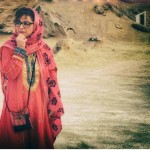
Parva, Iranian Singer, Passes Away!

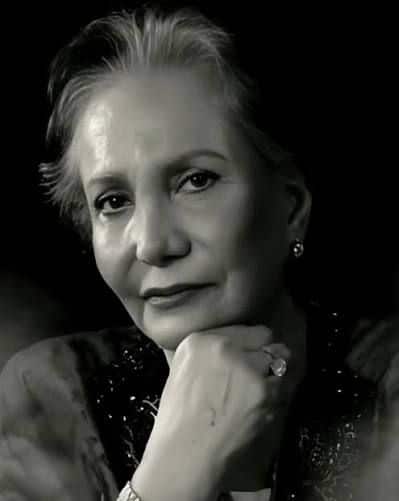
Parva, a singer of Iranian music, has passed away after a period of illness. In recent years, she had been residing in both Iran and Austria.

Parva, whose real name was Masoumeh Shahparvari, was born on June 5, 1949, in Tehran. She began her artistic career in 1969 with performances at the Youth Palace (Kakh-e Javanan). She subsequently collaborated with Iran’s Educational Television and in 1975 joined the National Iranian Radio and Television as a staff artist.

During her professional career, she collaborated with composers and lyricists such as Bozorg Lashkari, Hossein Samadi, Anoushirvan Rouhani, Mohammad-Ali Bahmani, Karim Fakour, Touraj Negahban, and Hossein Monzavi.

One of her best-known works is the composition “Mowsem-e Gol” (Season of Flowers), with lyrics by Esmaeil Navab-Safa and based on a Kurdish melody recreated by Mojtaba Mirzadeh, which was warmly received by audiences.

Parva’s professional career came to a halt after the 1979 revolution, when female singing was banned in Iran. However, in the following years, she studied and later taught classical Persian vocal music (āvāz-e dastgāhi) under the tutelage of Parisa and Masoumeh Mehrali, and remained active in recording and teaching this musical tradition.

During her periods of residence in Austria and Iran, she collaborated with artists including Mohammad Shams, Shahriar Fariyousefi, Hassan Nahid, Fazlollah Tavakkol, Kambiz Roshanravan, Ali Derakhshan, Houshang Farahani, Mohammad-Reza Amirghasemi, Behzad Abdi, Babak Shahraki, Alireza Daryaei, and Sadjad Pourghanad. Some of these works have been released.

Among the most significant of these is the album *”Bahār rā Bāvar Kon”* (Believe in Spring), composed by Mohammad Shams, which was released on CD and features pieces for symphony orchestra, Persian instruments, choir, and solo vocals.

Parva’s vocal classes ceased in her later years as she battled cancer, during which time she generally resided in Austria.

In the final months of her life, despite her illness, she was actively planning the release of her recorded works and organizing a concert led by Nezhat Amiri, pursuing these efforts with great seriousness.

Her colleagues and friends have always spoken admiringly of her indomitable and steadfast spirit, recalling how she would come to the studio with a walker, even at the height of her cancer and while undergoing chemotherapy in Tehran, and record her vocals with resolve and authority.

A large portion of her recordings from recent years has yet to be released from the studios and awaits publication.

Post a Comment


Warning: Undefined variable $user_ID in C:\host-websites\harmonytalk.com\domains\en.harmonytalk.com\www\wp-content\themes\harmonytalk\comments.php on line 93
Required fields are marked *
*
*
Your email is never shared.

Parva, Iranian Singer, Passes Away!

Parva, a singer of Iranian music, has passed away after a period of illness. In recent years, she had been residing in both Iran and Austria.

Iraj Passes Away!

Iraj (Hossein Khajeh-Amiri), born on January 1, 1933, in Natanz, and one of the most renowned figures in Iranian vocal music, passed away at the age of 94 after several months of illness. He was born into an artistic and cultivated family; his ancestor was a celebrated singer during the era of Nasser al-Din Shah Qajar, and his father, who himself possessed a fine voice and was well-versed in the radifs (modal systems) of Persian music, devoted years to training his son’s voice. In his early youth, Iraj also participated in Ta’ziyeh (religious passion plays) and learned the subtleties of vocal performance step by step from Ta’ziyeh performers who had mastered the radifs and modes.

From Past Days…

Three singers in one larynx

Sima Bina (b. 1945) is a unique singer among the singers of Golha radio programmes which were broadcast on Iranian National Radio for 23 years from 1956 to 1979. She received her first lessons in music from her father who was a poet, a musician and the most important supporter of Sima’s cultural activities.

Parviz Meshkatian’s Heart Beat for People (II)

As such, the young Meshkatian reached the position of a great maestro in the Iranian music. Up until 1997, Meshkatian remained prolific and composed many pieces which were characterized by progressiveness while drawing on the music of the past Iranian musicians. In some of Meshkatian’s works, one can trace the influence of maestros such as Faramarz Payvar; however, this influence is so balanced that one can neither say that Meshkatian is a progressive and deconstructionist composer nor does he use cliché forms in his compositions.


Warning: Undefined array key 0 in C:\host-websites\harmonytalk.com\domains\en.harmonytalk.com\www\wp-content\themes\harmonytalk\functions.php on line 525

Transition to Enlightenment: Six Lectures on Mozart’s String Quartets (1)

Transition to Enlightenment: Six Lectures on Mozart’s String Quartets* Basic Ideas and General Structure The Enlightenment, an epoch of intellectual fervor marked by reason, individualism, and cultural evolution, indelibly left its imprint on the arts. Mozart, a luminary of this transformative era, intricately wove these ideals into his compositions, particularly his string quartets. This article…
Read More »

Is the Iranian National Anthem a Copy? (I)

The alleged similarity between the Iranian and South Korean National Anthems has been a matter of discussion among musicians in Iran for several years. Earlier in 2021, the issue was taken to the media again with not only claims that the anthem is very similar to another song but also the suggestion that its musical content should draw more on the Iranian national music. Some even went to the extent to suggest replacing it with the song “O, Iran” composed by the late Rouhollah Khaleghi. Before delving more into the main issue, it would not go amiss to consider some technical characteristics of the song “O, Iran” composed in 1944.

A Note on the Occasion of Houshang Zarif’s Demise

No introduction is needed when talking about the position of the late Houshang Zarif (1938-2020) in the Iranian music. His character and personality are so well-known among musicians that his name per se is a symbol and role model for the Iranian youth. “Becoming Houshang Zarif” is the dream of many young people who enter the world of music in Iran and many of whom retire regretting the realisation of this dream.

Principles of Violin Playing (X)

Creating sound continuity between two notes in the source and destination positions when left hand position changes and “two different finger numbers” are involved is called portamento. Portamento can be performed on single string or two neighboring strings and with hand moving on fingerboard either upward or downward.

A Miracle in the Iranian Music: About Tehran Flute Choir’s Eight-year Tenacity

Tehran Flute Choir is a 40-member orchestra of Iran’s best flutists; Iran’s best flutists? Yes! If you write down the names of the greatest Iranian flute players who participate at concerts and contribute to academic centers in Iran, you will see that most of them are among the choir’s members.

Farhad Poupel (photo: Radafra)

Farhad Poupel: The Voice of the Shahnameh in the Orchestras Around the World

In an era when almost no trace of contemporary Iranian music can be heard in international concert halls, except (so-called!) avant-garde works that owe their existence solely to the fashionable slogans of the “pseudo-intellectual” crowd who have seized the already meager resources for performing classical music from the true artists of the field, the numerous performances of Farhad Poupel’s works shine as a ray of hope for lovers of sincere musical art. Without resorting to trendy slogans, he has kept the flame of Iranian classical music alive purely through the power of his artistry.

Interview with the Makers of the New Qeychak (II)

Regarding the classification of a new instrument in an instrument family, one can point to a number of fundamental issues, one of the most obvious of which is the instrument’s visual features. If we look at how the new instrument has changed compared to its historical versions, the set of visual elements that link the instrument to the Qeychak family becomes apparent. But other characteristics such as the geometric dimensions of the instrument, characteristics of the instrument’s various parts and how they relate to each other, its systematic performance, its sound range (compared to modern versions), the material and color of the sound, the way it is played and the like, can be considered in order to classify the instrument in the Qeychak family.

Motherland Orchestra Broke the Spell of the Covid-19 Restrictions

The Motherland Orchestra staged the first concert since the outbreak of the pandemic under the baton of Nezhat Amiri. The orchestra went on stage on December 23-24, 2021 in memory of Rouhollah Khaleghi and Golnoush Khaleghi at Vahdat Hall, Tehran, Iran. Since the pandemic outbreak, concerts were held online and restrictions were imposed on in-person concerts.