Is the Iranian National Anthem a Copy? (II)

Translated by Mahboube Khalvati

In response, it should be said that it is better for the national anthem of a country to use the musical material exclusive to that country; however, some problems might come up in doing so the most important of which include: lack of familiarity of other countries’ music performer with the concerned country’s specific music intervals and special musical technique; and secondly, the strangeness of that music to the foreign listener.

These two very important problems have nowadays caused the national anthem of most countries in the world, including our country Iran, to feature a series of clichés, namely:

  • The anthem’s duration: about one minute;
  • Mode: Major;
  • Meter: simple beat pattern (march beat pattern);
  • Polyphony: Tertian Harmony;
  • Orchestra and choir characteristics: Symphony orchestra with male and female choir in monophonic form. (It is worth mentioning that recently, the Iranian national anthem broadcasted from the media lacks the women’s choir for unknown reasons);
  • Melodic characteristics: the melody begins with a dominant ascending movement to the tonic with a magnificent beat accompanied by wind-brass and percussion instruments; the middle features with a piano nuance and constant movements of melodies, the end a glorious descend with powerful accompaniment of percussion and wind-brass instruments featuring a forte nuance.

The above-mentioned six characteristics exist in most national anthems worldwide. The existence of these elements is behind the existence of a series of cliché and similar national anthems around the world, which of course can be understood and performed by music performers and audiences.

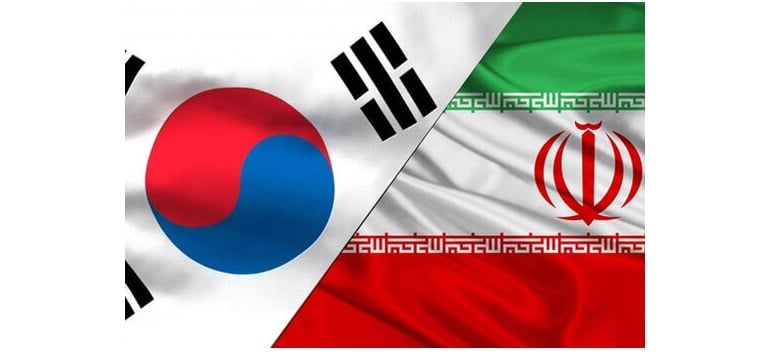
Apart from the issues mentioned, the other similarities between the two national anthems in question (Iranian and South Korean anthems) are only related to a few final tones at the end of the musical phrases of these anthems, which certainly cannot be an example of “plagiarism”; otherwise, on the same ground, we should consider that many of the works of great classical composers are copied from each other!

In Iran, we have a mode similar to major, which we call Mahour, but some countries in the world do not have such a mode in their folklore and national music. If the South Korean national anthem, was not drawn on Western music and was not driven from Korean folk music, it would most probably have sounded very strange and probably impossible to perform for music performers in the Middle East and the West.

It can be said that Bahman (Hassan) Riahi, the creator of outstanding works of Iranian symphonic music such as “The Iranian Suite”, could have composed a better melody for Iran’s national anthem compared to what we hear today; though, having listened to other countries’ national anthems and become familiar with the repetitive elements in these songs, the author thinks it would be extremely unfair to claim that Iran’s national anthem “is a copy”.
 

Post a Comment

Required fields are marked *
*
*
Your email is never shared.

Farhad Poupel: The Voice of the Shahnameh in the Orchestras Around the World

In an era when almost no trace of contemporary Iranian music can be heard in international concert halls, except (so-called!) avant-garde works that owe their existence solely to the fashionable slogans of the “pseudo-intellectual” crowd who have seized the already meager resources for performing classical music from the true artists of the field, the numerous performances of Farhad Poupel’s works shine as a ray of hope for lovers of sincere musical art. Without resorting to trendy slogans, he has kept the flame of Iranian classical music alive purely through the power of his artistry.

Five Major Myths About Mozart’s Life

Wolfgang Amadeus Mozart, the renowned Austrian composer, is undoubtedly one of the greatest geniuses in the history of classical music. However, his life is surrounded by numerous myths and legends, some of which are not based on facts. This article explores five of the most common misconceptions about Mozart’s life.

From Past Days…

Behzad Abdi’s opera Rumi was physically released by Naxos

Composing a traditional Iranian opera using the Iranian modal system, dastgāh, has always been my dream. I first approached this by composing an opera called Ashura followed by the operas Rumi and Hafez. I believe that in order to attract an international audience for Iranian opera, it is essential to fuse dastgāh with Western classical forms.

Polyphony in Iranian Music (V)

In addition to the above-mentioned, polyphony can be also formed when a melody is performed by several singers in different ambiances or different sound registers according to their physiologic abilities. An example of this has been performed in rituals of Khanqah of Ghaderi darawish of Mahabad[i].

Developments in Iranian Music Since Qajar Era (I)

At the end of the Qajar era and as Iran entered the power transition period, known as the constitutional era, the Iranian music went through a lot of changes. These changes gained momentum as the students and followers of Ali Naqi Vaziri’s entered the musical scene. These changes greatly influenced designs of instruments, playing methods, singing, composing, etc.

A combination of technique and musicality in the fingers of a pianist

In the world of classical music, the position of soloist has always been exceptional. Apart from the technical ability that many orchestral musicians also have, the soloist must also have a special power to be able to present a different and unique perspective of a piece. The soloist must maintain its special power of expression not only in solo roles but also when interacting with the orchestra.

Principles of Playing Violin (VI)

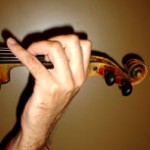
B. applying force: the force needed for putting finger on finger board is applied through finger tips and using the rest of hand set especially wrist is not allowed. To practice this, it is possible to hold violin without the bow and throw the fingers on the finger board from 1-2cm distance; apply force only through finger tips.

Last Year under the Light of Music

Almost three months into the new Iranian year (starting March 21), it is still not too late to have a look at the last year and the challenges that the musicians faced. The following article was published on the first day of the New Year in the Persian edition of the HarmonyTalk journal.

Ennio Morricone’s music for Quentin Tarantino’s The Hateful Eight

After watching Quentin Tarantino’s latest movie, The Hateful Eight, everyone was excited by its novel music besides the beautiful scenes of blood and guts.
The Hateful Eight is the first collaboration between the world-famous film music composer, Ennio Morricone, and Quentin Tarantino as a famous director.

A year without Mohsen Ghanebasiri

The year 1396 (21 March 2017-20 March 2018) was the most sorrowful year for HarmonyTalk journal. One month after holding HarmonyTalk’s 13th establishment anniversary in Mohsen Ghanebasiri’s house in Tehran in April 2017, he untimely passed away. Mohsen Ghanebasiri was the prominent HarmonyTalk author.

Parviz Meshkatian’s Heart Beat for People (II)

As such, the young Meshkatian reached the position of a great maestro in the Iranian music. Up until 1997, Meshkatian remained prolific and composed many pieces which were characterized by progressiveness while drawing on the music of the past Iranian musicians. In some of Meshkatian’s works, one can trace the influence of maestros such as Faramarz Payvar; however, this influence is so balanced that one can neither say that Meshkatian is a progressive and deconstructionist composer nor does he use cliché forms in his compositions.

Celebrating 20 Years of Harmony Talk’s Journey: Resilience, Evolution, Honoring the Legacy and Navigating Future Growth

In a momentous celebration of two decades, the “Arasbaran Cultural Center” was the stage for the 20th anniversary of “Harmony Talk”, an online journal that has become a cornerstone in the music community. Sadjad Pourghanad, the editor-in-chief, delivered a speech that resonated with gratitude and vision.