Fereydoun Shahbazian, the renowned Iranian composer, passed away at the age of 82 due to respiratory illness in Tehran. His last significant activity was leading the National Orchestra before the appointment of Homayoun Rahimian.
Tag Archives: Iran National Orchestra
Latest posts
- Parva, Iranian Singer, Passes Away!
- Iraj Passes Away!
- Sohrab Pournazeri Becomes a Member of the GRAMMY Academy
- Shapour Rahimi Passes Away
- ShirMohammad Espandar Passes Away
- Jamshid Chemirani Passes Away
- Book “Iranian modal system (Dastgah music) modes” Published
- Transition to Enlightenment: Six Lectures on Mozart’s String Quartets (5)
- Nasser Masoudi: The Voice of Gilan and a Legacy of Iranian Music
- Farhad Poupel: The Voice of the Shahnameh in the Orchestras Around the World
- Five Major Myths About Mozart’s Life
- Bahma Rajabi Passed Away!
From Past Days…

Principles of Playing Violin (V)
3/1/2/5: When the first finger lands next to the nut, continuation of first phalange of this finger, on back of the hand, should be in line with continuation of the back of the wrist and the left hand; moreover, it should not pass them and bend at knuckles. Otherwise, an uncommon stretch is created in first finger’s knuckle also reducing the freedom of other fingers (especially the fourth finger) in finger placement.
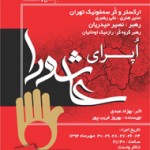
Ashoura Opera
Ashura Opera was composed by Behzad Abdi, the Iranian composer, in 2008 based on librettos compiled by Behrouz Gharib. The main source for the libretto is poems by Mohtasham Kashani, a sixteenth century Iranian poet.

Celebrating 20 Years of Harmony Talk’s Journey: Resilience, Evolution, Honoring the Legacy and Navigating Future Growth
In a momentous celebration of two decades, the “Arasbaran Cultural Center” was the stage for the 20th anniversary of “Harmony Talk”, an online journal that has become a cornerstone in the music community. Sadjad Pourghanad, the editor-in-chief, delivered a speech that resonated with gratitude and vision.
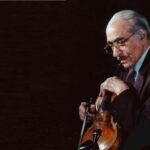
A Look at Ali Tajvidi’s Manifold Musical Activities (II)
Tajvidi thought of studying harmony and orchestration with Houshang Ostvar (who was eight years younger than him) at a time when he had gained a reputation among musicians. His humbleness, making him willing to kneel before the scholars at any age and position, became the key to his scientific success. After this period, Tajvidi made some of his works polyphonic, the most prominent of which is “Burn” set to a poem by Abdullah Ulfat. However, his ability to make his works polyphonic was not so great to make him self-sufficient; so he depended on musicians such as Farhad Fakhreddini, Fereydoun Naseri, Kambiz Roshanravan, Fereydoun Shahbazian and Morteza Hananeh for the arrangement of his compositions.
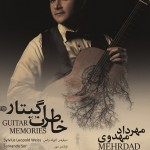
“Guitar Memories” Released
The album “Guitar Memories” consists of the performance of baroque to recent era masterpieces, by Mehrdad Mahdavi, and is published by Tanin-e Honar Publication.
In this album there are pieces composed and arranged by artists such as: Sylvius Leopold Weiss, Johann Anton Logy, Fernando Sor, Yuquijiro Yocoh, Leo Brouwer.
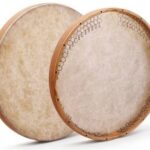
The Structure of Kurdistan Daf (II)
With its simple physical structure and captivating sound, the Daf never belonged to a particular culture or location, and every nation had different usages for this instrument considering their dominant customs and traditions.
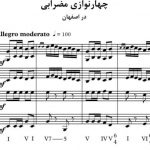
Inefficiency of some chords and harmonization systems in Iranian music
Discussions and research have been conducted on the harmonization of “dastgah” and melodies in Iranian music, and several books have been published on this topic, including “Armenian Music of Iran” by Ali Naghi Vaziri, “Harmony of Iranian Music” by Farhad Fakhreddini, and “Harmony of Iranian Music” by Ali Ghamssari. A master’s thesis titled “Presenting a Solution for Harmonizing Based on the Structure of Tritone Intervals” was written by Atefeh EinAli in 2014. Additionally, the invention and use of “Even Harmony” by Morteza Hannaneh should be mentioned.

Principles of Violin Playing (I)
The present series of training articles, “Principles of Violin Playing”, seek to help students, to appropriately understand this field, by gradually introducing, categorizing, and teaching the myriad relevant points. One of the principles of playing violin, which must be always kept in mind, is that the selection of the most natural position for the body parts while playing is the best and most appropriate solution. As a matter of fact, any unnatural body part position which requires lots of energy or unusual stretching to maintain, is wrong.

Persian Music: “Mahour the Great” in Austria
In 1990 an Austria-based Persian musician Khosro Soltani, in cooperation with Hossein Alizadeh, put out an album entitled, Ancient Call A New (Nobang-e Kohan). After many years, a few ancient Persian instruments such as Sorna, Karna, Naghareh,etc. have been used, instruments which have been left out of the circle of Persian classical musical instruments for centuries.
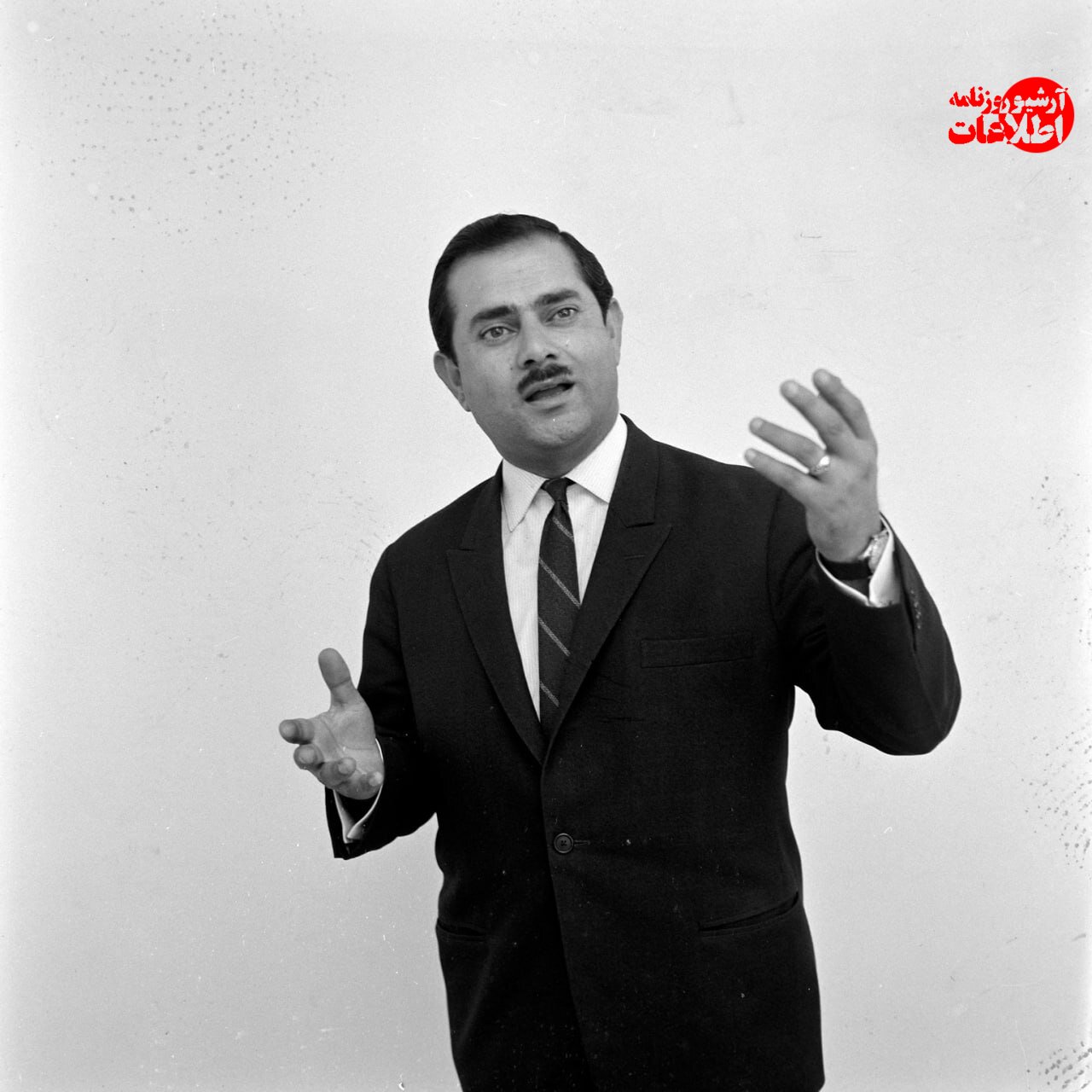
Nasser Masoudi: The Voice of Gilan and a Legacy of Iranian Music
In Iranian music, certain singers have become emblematic of their homelands through their distinctive voices. Historical figures such as Eghbal Sultan, who epitomized the grandeur of Azerbaijani music, and Taj Isfahani, who conveyed the authentic essence of Isfahan, serve as notable examples from the Qajar era. Nasser Masoudi occupies a similar position; his voice emerged as a symbol of Gilan while also achieving national acclaim. Before him, Master Ahmad Ashurpur represented Gilan’s musical landscape, but his extended residence outside Iran limited his continuous engagement in the music scene. In contrast, Masoudi’s consistent presence allowed him to introduce the voice of Gilan to audiences across Iran.