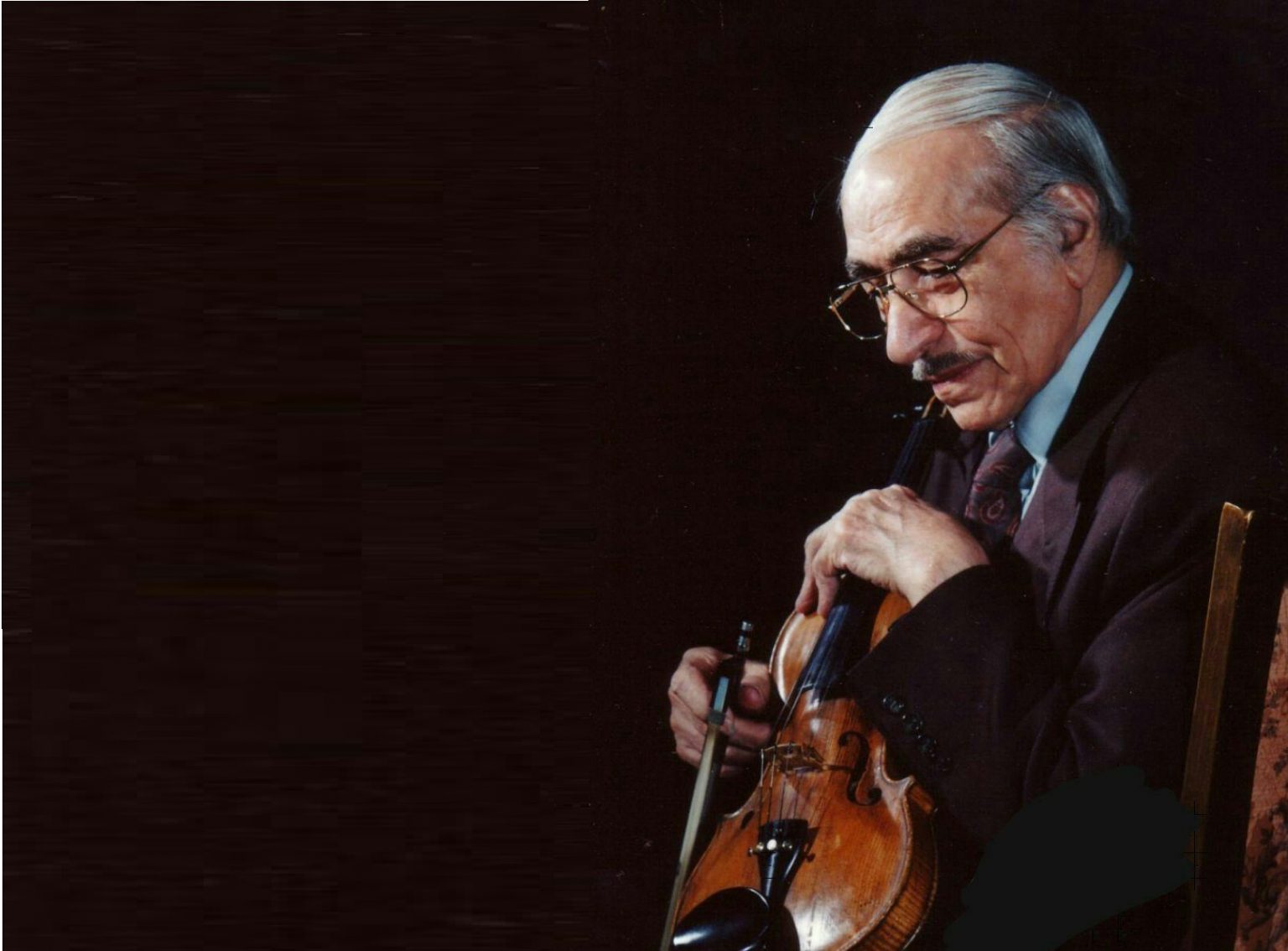
A Look at Ali Tajvidi’s Manifold Musical Activities (I)

Translated by Mahboube Khalvati
Ali Tajvidi (1920 – 2004), one of the most prominent Iranian musicians, passed away sixteen years ago. He was one of the most distinguished Iranian artists. To specify one of the fields in which he was unique, one can refer to Tasnif composition. A brief review of his manifold musical activities is presented below.
Tajvidi, the composer of Tasnifs
Ali Tajvidi is outlived by his many Tasnifs. As Tajvidi mentioned, out of 300 to 350 pieces he has composed, the majority have been either Tasnifs or Taraneh. One can rightly claim that out of all these Tasnifs, more than 20 of them are still popular and have been performed and re-worked over and over.
Interestingly enough, Tajvidi has composed valuable works in two Dastgahs which were less used by his fellow composers, i. e., Chahargah and Nava, which are still well-known among Iranians. Avoiding clichés and coming up with innovations were features of his pieces even when he was composing in more popular Dastgahs such as Bayat Tork; this is while few artists could evade the clichés of this mode as much as Tajvidi did. In his Tasnif, “I Am Worried”, Tajvidi stands somewhere between Bayat Tork and Shoor; and in his “Childhood” no clichés of “model melody” of the Radif are identified.
Apart from his Tasnifs’ melodic strength, Tajvidi was excellent in setting poems to music in his own time. Maestro Hossein Dehlavi, prominent composer and the author of a book entitled Marriage of Poetry and Persian Vocal Music (2011) brought examples from Ali Tajvidi’s Tasnifs describing the latter as a composer who always observes the rules of setting poems to music unconsciously.
Tajvidi, the Violinist
There are many recordings available of Tajvidi playing the violin which has the following four characteristics: 1. his personal style in combining the violin playing styles of Abolhassan Saba and Hossein Yahaghi; 2. Remarkable variety of Tahrir 3. Using spiccato techniques in a skillful manner which is rarely done by other Iranian violinists 4. Playing out of tune on and off.
The last of the above-mentioned features along with his often harsh sonority made Tajvidi’s playing style fail to become popular among the general public. Was it not for this feature, he would have been an unrivaled violinist whose technical characteristics and edition could serve as a bridge to fill the gap between the rich content and Tahrir of Saba’s style and Yahaghi’s lyrical style. A role which, in Tajvidi’s absence, Habibollah Badiee played with less variety of Tahrir; yet, he won popularity.
Post a Comment

Required fields are marked *
*
*
Your email is never shared.

Farhad Poupel: The Voice of the Shahnameh in the Orchestras Around the World

In an era when almost no trace of contemporary Iranian music can be heard in international concert halls, except (so-called!) avant-garde works that owe their existence solely to the fashionable slogans of the “pseudo-intellectual” crowd who have seized the already meager resources for performing classical music from the true artists of the field, the numerous performances of Farhad Poupel’s works shine as a ray of hope for lovers of sincere musical art. Without resorting to trendy slogans, he has kept the flame of Iranian classical music alive purely through the power of his artistry.

Five Major Myths About Mozart’s Life

Wolfgang Amadeus Mozart, the renowned Austrian composer, is undoubtedly one of the greatest geniuses in the history of classical music. However, his life is surrounded by numerous myths and legends, some of which are not based on facts. This article explores five of the most common misconceptions about Mozart’s life.

From Past Days…

Interview with the Makers of the New Qeychak (II)

Regarding the classification of a new instrument in an instrument family, one can point to a number of fundamental issues, one of the most obvious of which is the instrument’s visual features. If we look at how the new instrument has changed compared to its historical versions, the set of visual elements that link the instrument to the Qeychak family becomes apparent. But other characteristics such as the geometric dimensions of the instrument, characteristics of the instrument’s various parts and how they relate to each other, its systematic performance, its sound range (compared to modern versions), the material and color of the sound, the way it is played and the like, can be considered in order to classify the instrument in the Qeychak family.

A few steps on the “Road to Bach”

The world of music has unparalleled respect for Bach. Bach is considered the spiritual father of classical music; Bach’s great position is due not only to his great achievements in the fields of harmony, counterpoint, and compositional sciences but also to his respect for and adherence to the artistic principles of classical music. In the history of classical music, it is recorded that Bach walked about fifty kilometers to listen to the music played by the great German organist Dieterich Buxtehude, and this is the path that every idealistic classical music student should walk.

Iranian Fallacies – Global Performance

One of the most important criteria for measuring the quality of a piece of classical music is number of times the piece has been performance by different ensembles and orchestras in different eras. This belief has become so pervasive in some societies, such as Iranian society, that it is considered the only criterion for measuring the quality of a piece of classical music.

Polyphony in Iranian Music (III)

In heterophonic variant, two performers perform a single melody simultaneously and change it. Performing and changing a single melody simultaneously by two performers leads to the coincidence of different voices.

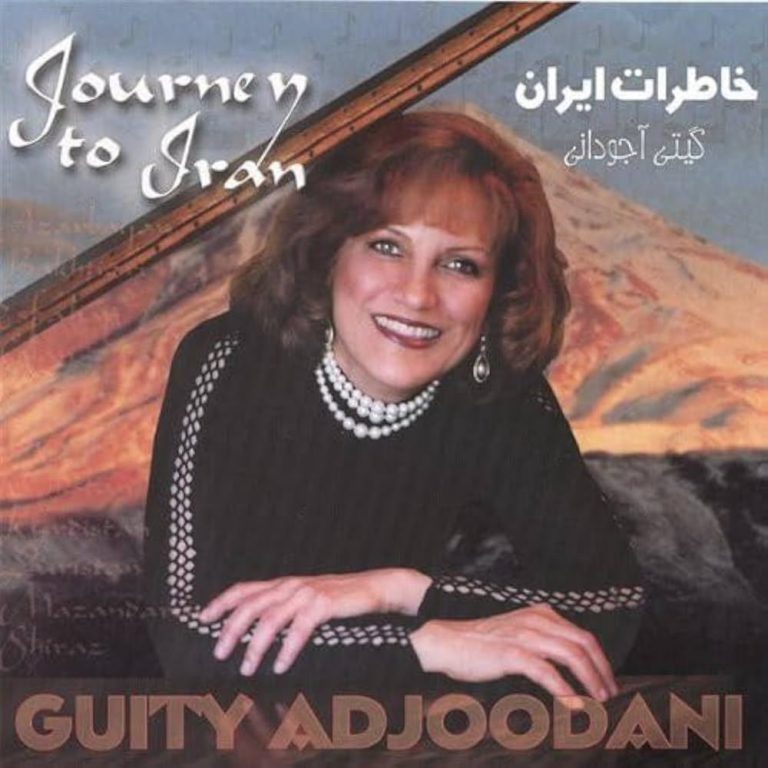
Journey to Iran Revisited: Celebrating 20 Years of Guity Adjoodani’s Return to Persian Roots

This year marks the 20th anniversary of “Journey to Iran,” an album by Iranian pianist Guity Adjoodani that has resonated with audiences worldwide. Released two decades ago, this album is a beautiful tapestry of twenty Persian folk songs, each carefully selected from the rich musical traditions of various regions in Iran. It also features four notable compositions by the esteemed Javad Maroufi (1915-1992): “Prelude,” “Jila Fantasia,” “Golden Dreams” (Khaab-haa-ye Talaayi), and “Isfahan Rhapsody.” Additionally, the album includes the beloved song “Kiss Me” (Maraa Bebous) by Majid Vafadar (1912-1975), adding depth to an already impressive collection.

The Legacy of Khosrow Jafarzadeh

This year marks the fifth anniversary of the passing of Khosrow Jafarzadeh (Khosrow Djafar-Zadeh), a distinguished architect and pioneering researcher of Iranian music, whose contributions to the magazine “Harmony Talk” have left an indelible mark on the field. The absence of this remarkable individual has significantly impacted the expansion and advancement of his theories, which are heralded as some of the most progressive in the history of Iranian music

A Look at Ali Tajvidi’s Manifold Musical Activities (I)

Ali Tajvidi (1920 – 2004), one of the most prominent Iranian musicians, passed away sixteen years ago. He was one of the most distinguished Iranian artists. To specify one of the fields in which he was unique, one can refer to Tasnif composition. A brief review of his manifold musical activities is presented below.

The Structure of Kurdistan Daf (I)

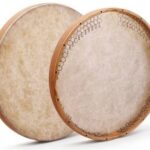
Today, percussion instruments have such a high place in music that are an essential element of orchestras. This has attracted many people to this type of instrument with roots as old as the first humans. A historical study of music, shows that humans used the sound of these instruments to defend themselves against wild animals and, over time, for alerting each other, signaling their readiness and encouraging people for war, ritual ceremonies, dances, etc. in a manner that is still clearly visible in music and some ritual ceremonies.

A combination of technique and musicality in the fingers of a pianist

In the world of classical music, the position of soloist has always been exceptional. Apart from the technical ability that many orchestral musicians also have, the soloist must also have a special power to be able to present a different and unique perspective of a piece. The soloist must maintain its special power of expression not only in solo roles but also when interacting with the orchestra.

Call for papers SIMF 1396

The Association of Iranian Contemporary Music Composers (ACIMC) and SHAHREAFTAB Art & Cultural Association are pleased to announce a call for papers for SIMF 1396.