Musical Sense or Technique?

Translated by Mahboube Khalvati
One of the most popular terms used by Iranian instrumentalists is the existence or a lack of musical “sense”. Both musicians and fans of music consider having “sense” while playing music as an important principle to the extent that they use it vis-a-vis having technique.
Firstly, this question should be addressed: why is the term “having or not having sense” for an instrumentalist wrong?
When a virtuous musician performs a piece, he/she uses tricks to beautify his/her performance; however, if another musician performs the same piece the ambience and the sense differ compared to the first performance.
In Western classical music, the corresponding term is “edition”.
When a piece is edited by another musician the melodies are performed intact as they were originally composed; however, nuances, sequence tone and sonority differ.
As a matter of fact what we consider as sense is the musician’s mental status which leads to a unique interpretation of the piece.
The process involves moving from a musical sense to musical and performance techniques. This might seem as a trivial mistake but has led to this illusion in the society of musicians that “only the existence of sense makes a musician prominent.” This is while in the western countries, musical edition is academically taught. In west, musical sense includes stylistics, aesthetics and interpretation which guide musicians’ mentality for the final edition.
Virtuous musicians’ editions are sold for high prices in western countries so that other musicians can demystify editions of prominent musical performances.

Post a Comment

Required fields are marked *
*
*
Your email is never shared.

Farhad Poupel: The Voice of the Shahnameh in the Orchestras Around the World

In an era when almost no trace of contemporary Iranian music can be heard in international concert halls, except (so-called!) avant-garde works that owe their existence solely to the fashionable slogans of the “pseudo-intellectual” crowd who have seized the already meager resources for performing classical music from the true artists of the field, the numerous performances of Farhad Poupel’s works shine as a ray of hope for lovers of sincere musical art. Without resorting to trendy slogans, he has kept the flame of Iranian classical music alive purely through the power of his artistry.

Five Major Myths About Mozart’s Life

Wolfgang Amadeus Mozart, the renowned Austrian composer, is undoubtedly one of the greatest geniuses in the history of classical music. However, his life is surrounded by numerous myths and legends, some of which are not based on facts. This article explores five of the most common misconceptions about Mozart’s life.

From Past Days…

 Ahmad Pejman Passed Away!

Composer and music teacher Ahmad Pejman (1935–2025) passed away on August 29 in Los Angeles, USA, after several weeks of illness. His most recent symphonic work performed in Iran was Land of the Brave (“Sarzameen-e Delavaran”), which was staged in 2017 with the Tehran Symphony Orchestra. According to the family’s decision, his body will be laid to rest in the United States.

Farshad Sanjari, Forgotten Iranian Conductor Met His Tragic End

Farshad Sanjari, one of the most renowned Iranian conductors in the 1970s in Iran died after fire broke in his apartment in Vienna on November 22, 2019. Farshad Sanjari was not involved in politics; however, he was one of the victims of the Iranian Islamic Revolution in 1979. After the victory of the Islamic Revolution, his name was never seen as the conductor of any programmes.

Ali Rahbari’s collaboration with Naxos as a Composer

Concertino for Violin and Orchestra entitled Nohe Khan was composed by Ali (Alexander) Rahbari while he was studying music in Vienna in 1972. This piece was composed having in mind the Ashoura events and inspired by the music which is used during the Ashoura ceremonies. The piece was first performed and recorded by Bijan Khadem…
Read More »

Polyphony in Iranian Music (VI)

Torqeh or jal is the same bird (Bimaculated lark) and is the name of a muqam which is well-known in Torbate Jam and those areas. Jal muqam is called Torqeh in Esfarayen and Bojnourd. This muqam which was used to be played by Bakhshis/Bagşies (dutar-players) in the past is seldom performed today.

Women and the Music Environment in Iran

The life territory of the female-male relations in the Iranian cultural context is basically a domestic territory and not a social-living one in the labour and leisure domains. To prove this, it only suffices to consider the Iranian men’s viewpoints about women. For the Iranian men, there are three perspectives regarding the women: mother, sister and wife. Mother represents the emotional territory; sister represents the logical territory at home while wife represents the sexual territory.

Farhad Poupel (photo: Radafra)

Farhad Poupel: The Voice of the Shahnameh in the Orchestras Around the World

In an era when almost no trace of contemporary Iranian music can be heard in international concert halls, except (so-called!) avant-garde works that owe their existence solely to the fashionable slogans of the “pseudo-intellectual” crowd who have seized the already meager resources for performing classical music from the true artists of the field, the numerous performances of Farhad Poupel’s works shine as a ray of hope for lovers of sincere musical art. Without resorting to trendy slogans, he has kept the flame of Iranian classical music alive purely through the power of his artistry.

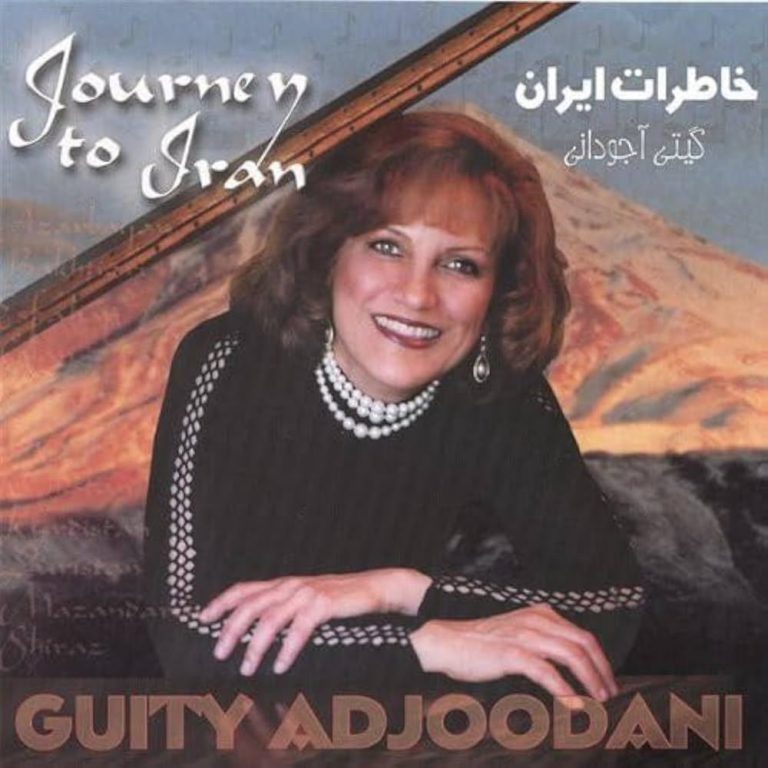
Journey to Iran Revisited: Celebrating 20 Years of Guity Adjoodani’s Return to Persian Roots

This year marks the 20th anniversary of “Journey to Iran,” an album by Iranian pianist Guity Adjoodani that has resonated with audiences worldwide. Released two decades ago, this album is a beautiful tapestry of twenty Persian folk songs, each carefully selected from the rich musical traditions of various regions in Iran. It also features four notable compositions by the esteemed Javad Maroufi (1915-1992): “Prelude,” “Jila Fantasia,” “Golden Dreams” (Khaab-haa-ye Talaayi), and “Isfahan Rhapsody.” Additionally, the album includes the beloved song “Kiss Me” (Maraa Bebous) by Majid Vafadar (1912-1975), adding depth to an already impressive collection.

Reza Vohdani; Unveiling unpublished works, preservation of Iranian classical music

Reza Vohdani is a renowned name among tar (traditional Iranian instrument) players, especially within the Iranian music community that values the meticulous practice and teaching of traditional music. While Vohdani honed his skills in music theory and tar playing under the guidance of masters like Ali-Naghi Vaziri, Ali-Akbar Shahnazi, Hossein Dehlavi, and Ahmad Forutan-Rad, it is his unwavering dedication to studying, documenting, and teaching the Iranian classical music repertoire that has solidified his prominence in the field. Recently, Vohdani’s family decided to make his preserved works accessible to the wider art and music community. In this regard, The Persian-language newspaper ‘Iran’ spoke with Sadjad Pourghanad, a musician, university instructor, and music researcher, who shared his opinion into the project, as detailed in the interview below.

Interview with the Makers of the New Qeychak (II)

Regarding the classification of a new instrument in an instrument family, one can point to a number of fundamental issues, one of the most obvious of which is the instrument’s visual features. If we look at how the new instrument has changed compared to its historical versions, the set of visual elements that link the instrument to the Qeychak family becomes apparent. But other characteristics such as the geometric dimensions of the instrument, characteristics of the instrument’s various parts and how they relate to each other, its systematic performance, its sound range (compared to modern versions), the material and color of the sound, the way it is played and the like, can be considered in order to classify the instrument in the Qeychak family.

Principles of Violin Playing (VIII)

1.5.1.3.sometimes, a player, due to different reasons, may decisively want to play continuously two notes with a half-step by means of the same finger, in such a case, it’s necessary to open the interior curve of the finger like a spring. Naturally coming back, the curve of finger should be closed and the finger should become curved shape again (see paragraph 3.1.2.1).