The Rudaki Foundation has presented the latest research achievement in the field of Iranian dastgāhī (classical modal) music to enthusiasts and researchers with the publication of the book “Modes of Iranian Dastgāhī Music”. This book is the result of years of effort by music researchers and specialists and can serve as a comprehensive and practical resource for performers, composers, and scholars.
Tag Archives: Saba Masoumiyan
Latest posts
- Tafazzoli: Monolingualism drives music into obscurity (1)
- Parva, Iranian Singer, Passes Away!
- Iraj Passes Away!
- Sohrab Pournazeri Becomes a Member of the GRAMMY Academy
- Shapour Rahimi Passes Away
- ShirMohammad Espandar Passes Away
- Jamshid Chemirani Passes Away
- Book “Iranian modal system (Dastgah music) modes” Published
- Transition to Enlightenment: Six Lectures on Mozart’s String Quartets (5)
- Nasser Masoudi: The Voice of Gilan and a Legacy of Iranian Music
- Farhad Poupel: The Voice of the Shahnameh in the Orchestras Around the World
- Five Major Myths About Mozart’s Life
From Past Days…

“The Art of Silence” Project Will be Released
Shaahin Mohajeri, the award-winning Iranian microtonal compose, has contributed to The Art of Silence is an international project which features unpublished pieces by microtonal composers from Iran, Japan, the United States, and other countries.
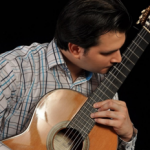
New Technique for Playing Classical Guitar (II)
When the author was working on the piece “Playing Love” by Ennio Morricone (from the legend of 1900), he realized a failure of the Lip Technique. Needing to play a chord in the 14th position of the guitar and in order to complete the harmony, it is necessary to play a harmonic note on the 7th or 5th position; it was not possible to touch the string to play this harmonic note, because the Lip Technique is used for getting the notes and not to touch the string and producing harmonic notes. Naturally, the only possible way to touch the string was to use the nose at the required position and playing the note with the right hand, and this was the best option the author found to how to play such harmonic notes, and where the Nose Technique was generated.

Interview with Farhad Poupel (II)
Fantasia on One Note was my first professional work for piano, which had its world premiere by the great pianist Peter Jablonski in Sweden, and it has been performed by various pianists in the UK, Germany, France, and the Czech Republic. The recording of this work has also been broadcast on the Dutch public radio, NPR Radio 4.

Principles of Playing Violin (V)
3/1/2/5: When the first finger lands next to the nut, continuation of first phalange of this finger, on back of the hand, should be in line with continuation of the back of the wrist and the left hand; moreover, it should not pass them and bend at knuckles. Otherwise, an uncommon stretch is created in first finger’s knuckle also reducing the freedom of other fingers (especially the fourth finger) in finger placement.

Iranian Fallacies – School of Vaziri
The term “School of Vaziri” is often used in writings on Iranian music, but the exact meaning of the term is not clear; some of the authors have used the term to only refer to the group of Vaziri’s students, including a large group of his conservatory students and his Tar students such as Abolhassan Saba, Rouhollah Khaleghi, Ahmad Foroutan Rad, Hossein Sanjari, Heshmat Sanjari and others. But can we consider all Vaziri’s students as followers of his school of thought? This is definitely a mistake, because we know that some of Vaziri’s students have chosen a completely different path than that of Vaziri.

Avaye Naerika Percussion Orchestra
Avaye Naerika Percussion Orchestra is an Iranian percussion orchestra featuring 40 lady percussionists. The Orchestra was established as Iran’s largest all-female percussion orchestra in 2008 by Ms. Minoo Rezaei under the title Naerika Percussion Orchestra and changed its name to Avaye Naerika in 2017.

Harmony in the Iranian Music (I)
Translated by Mahboube Khalvati The article you are about to read was written by Rouhollah Khaleqi (1906-1965), composer, and conductor of Golha Orchestra (established in 1956). Khaleqi was one of the most prominent promoters of polyphony for the Iranian music and is one of the best representatives of the school of Ali Naghi Vaziri. In…
Read More
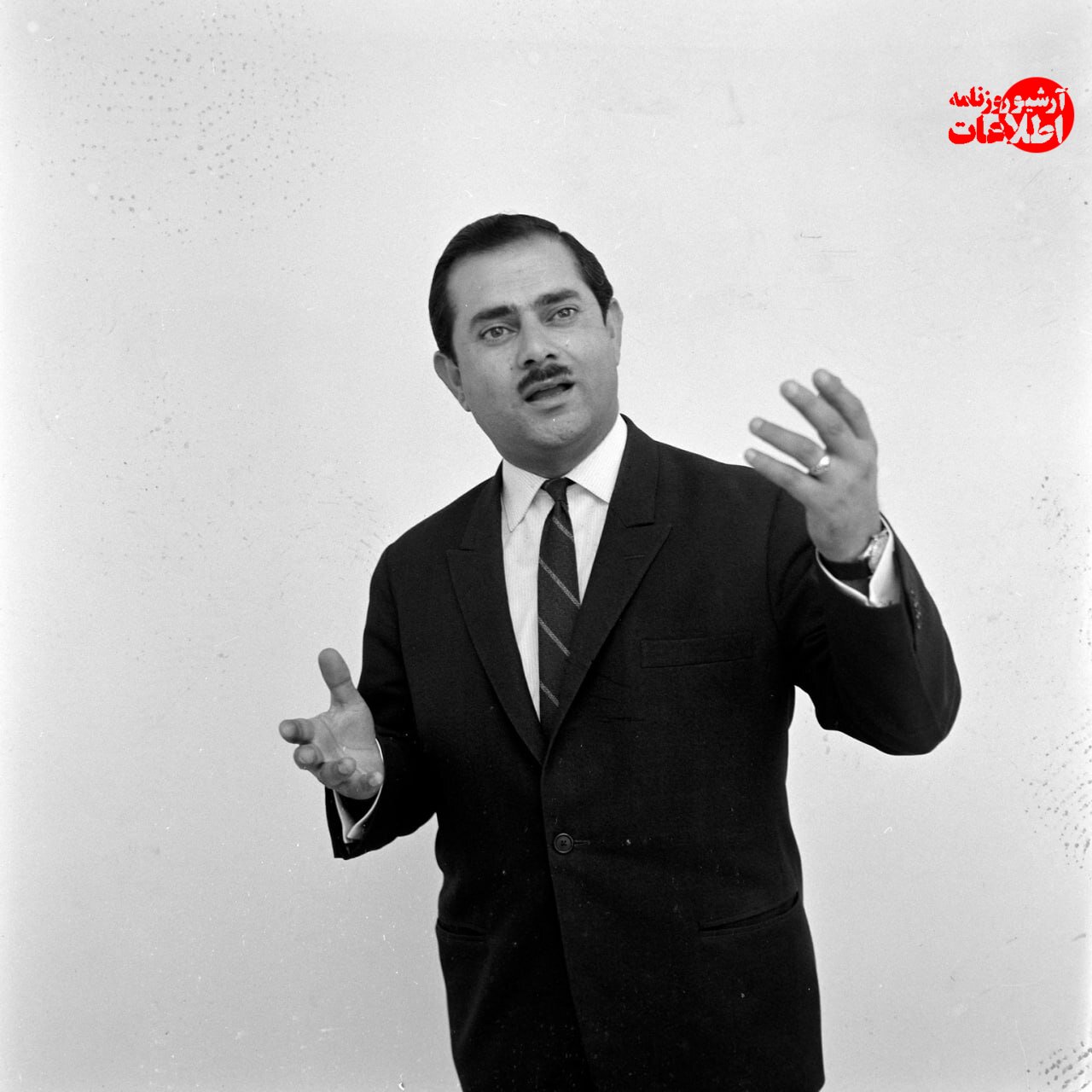
Nasser Masoudi: The Voice of Gilan and a Legacy of Iranian Music
In Iranian music, certain singers have become emblematic of their homelands through their distinctive voices. Historical figures such as Eghbal Sultan, who epitomized the grandeur of Azerbaijani music, and Taj Isfahani, who conveyed the authentic essence of Isfahan, serve as notable examples from the Qajar era. Nasser Masoudi occupies a similar position; his voice emerged as a symbol of Gilan while also achieving national acclaim. Before him, Master Ahmad Ashurpur represented Gilan’s musical landscape, but his extended residence outside Iran limited his continuous engagement in the music scene. In contrast, Masoudi’s consistent presence allowed him to introduce the voice of Gilan to audiences across Iran.
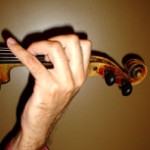
Principles of Violin Playing (X)
Creating sound continuity between two notes in the source and destination positions when left hand position changes and “two different finger numbers” are involved is called portamento. Portamento can be performed on single string or two neighboring strings and with hand moving on fingerboard either upward or downward.
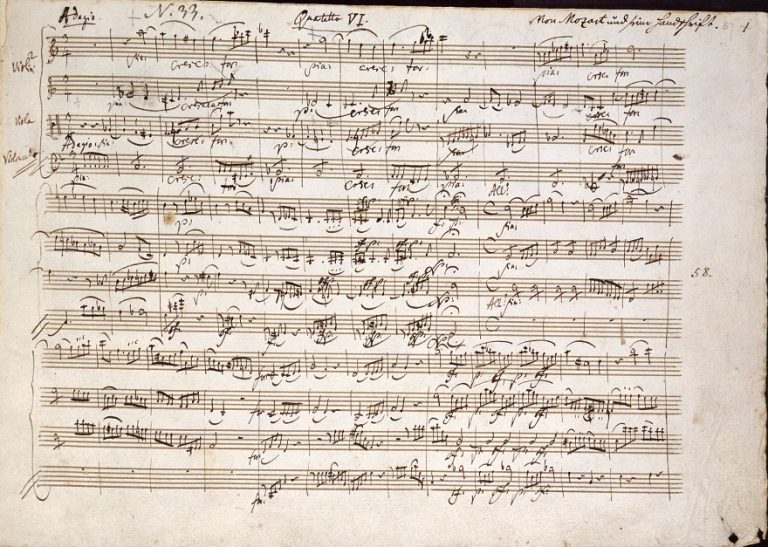
Transition to Enlightenment: Six Lectures on Mozart’s String Quartets (5)
The late 18th century was marked by profound societal changes across Europe, characterized by the rise of the bourgeoisie and the reshaping of musical patronage. Composers like Mozart responded to these shifts by adapting their compositional styles to align with the tastes and sensibilities of the emerging middle class. This article seeks to explore this phenomenon through an analysis of Mozart’s K. 499 quartet, also known as the “Hoffmeister” quartet, and his Prussian quartets, alongside the works of his contemporaries. By examining the evolution of the string quartet genre within the context of changing social structures and aesthetic preferences, this study aims to shed light on the dynamic relationship between music and society.