The Rudaki Foundation has presented the latest research achievement in the field of Iranian dastgāhī (classical modal) music to enthusiasts and researchers with the publication of the book “Modes of Iranian Dastgāhī Music”. This book is the result of years of effort by music researchers and specialists and can serve as a comprehensive and practical resource for performers, composers, and scholars.
Tag Archives: Farhoud Amirani
Latest posts
- Tafazzoli: Monolingualism drives music into obscurity (1)
- Parva, Iranian Singer, Passes Away!
- Iraj Passes Away!
- Sohrab Pournazeri Becomes a Member of the GRAMMY Academy
- Shapour Rahimi Passes Away
- ShirMohammad Espandar Passes Away
- Jamshid Chemirani Passes Away
- Book “Iranian modal system (Dastgah music) modes” Published
- Transition to Enlightenment: Six Lectures on Mozart’s String Quartets (5)
- Nasser Masoudi: The Voice of Gilan and a Legacy of Iranian Music
- Farhad Poupel: The Voice of the Shahnameh in the Orchestras Around the World
- Five Major Myths About Mozart’s Life
From Past Days…

Polyphony in Iranian Music (II)
With regard to each polyphonic form, only one specific and distinguished example is analyzed. These polyphonic forms are as follows:

Farshad Sanjari, Forgotten Iranian Conductor Met His Tragic End
Farshad Sanjari, one of the most renowned Iranian conductors in the 1970s in Iran died after fire broke in his apartment in Vienna on November 22, 2019. Farshad Sanjari was not involved in politics; however, he was one of the victims of the Iranian Islamic Revolution in 1979. After the victory of the Islamic Revolution, his name was never seen as the conductor of any programmes.

Shaahin Mohajeri Wins UnTwelve Composition Competition
UnTwelve Non-profit Organization announced the results of its 2014/2015 composition competition on January 28, 2015. Shaahin Mohajeri, an Iranian Tonbak player, microtonalist, acoustician and composer, was awarded the second prize for his piece “Castle of Babak.”

Homayoun Rahimian & Iran’s National Orchestra
The Roudaki Foundation presented the permanent conductor of the National Orchestra (Orchestr Melli), Homayoun Rahimian, in a ceremony, and finally, after four years, the national orchestra found a permanent conductor. Homayoun Rahimian is the fourth permanent conductor of this orchestra after Farhad Fakhreddini, Bardia Kiaras, and Fereidoun Shahbaziyan. He, who has previously had experience of conducting concerts besides being Meister’s concert of this orchestra, performed the concert “Autumns” on the 20th of Tir, performing works by Rouhollah Khaleqi, Javad Ma’roufi, and Hossein Dehlavi.

Five Major Myths About Mozart’s Life
Wolfgang Amadeus Mozart, the renowned Austrian composer, is undoubtedly one of the greatest geniuses in the history of classical music. However, his life is surrounded by numerous myths and legends, some of which are not based on facts. This article explores five of the most common misconceptions about Mozart’s life.

Iranian Fallacies – Global Performance
One of the most important criteria for measuring the quality of a piece of classical music is number of times the piece has been performance by different ensembles and orchestras in different eras. This belief has become so pervasive in some societies, such as Iranian society, that it is considered the only criterion for measuring the quality of a piece of classical music.
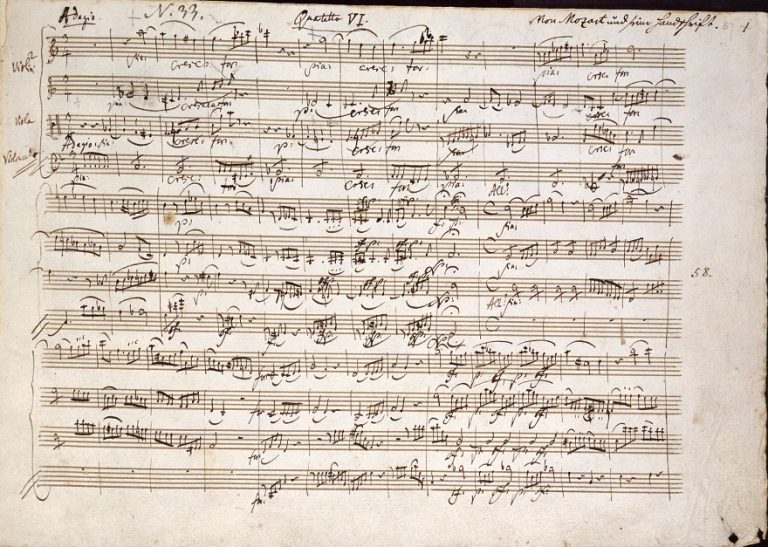
Transition to Enlightenment: Six Lectures on Mozart’s String Quartets (2)
Innovation and Creativity The Enlightenment era championed innovation, creativity, and the relentless pursuit of knowledge, values that resonate prominently in Mozart’s string quartets. Mozart, a luminary of the Enlightenment, used the quartet form as a playground for his inventive spirit, pushing the boundaries of traditional structures and harmonic progressions. Mozart’s innovative approach is evident in…
Read More
Jamshid Chemirani Passes Away
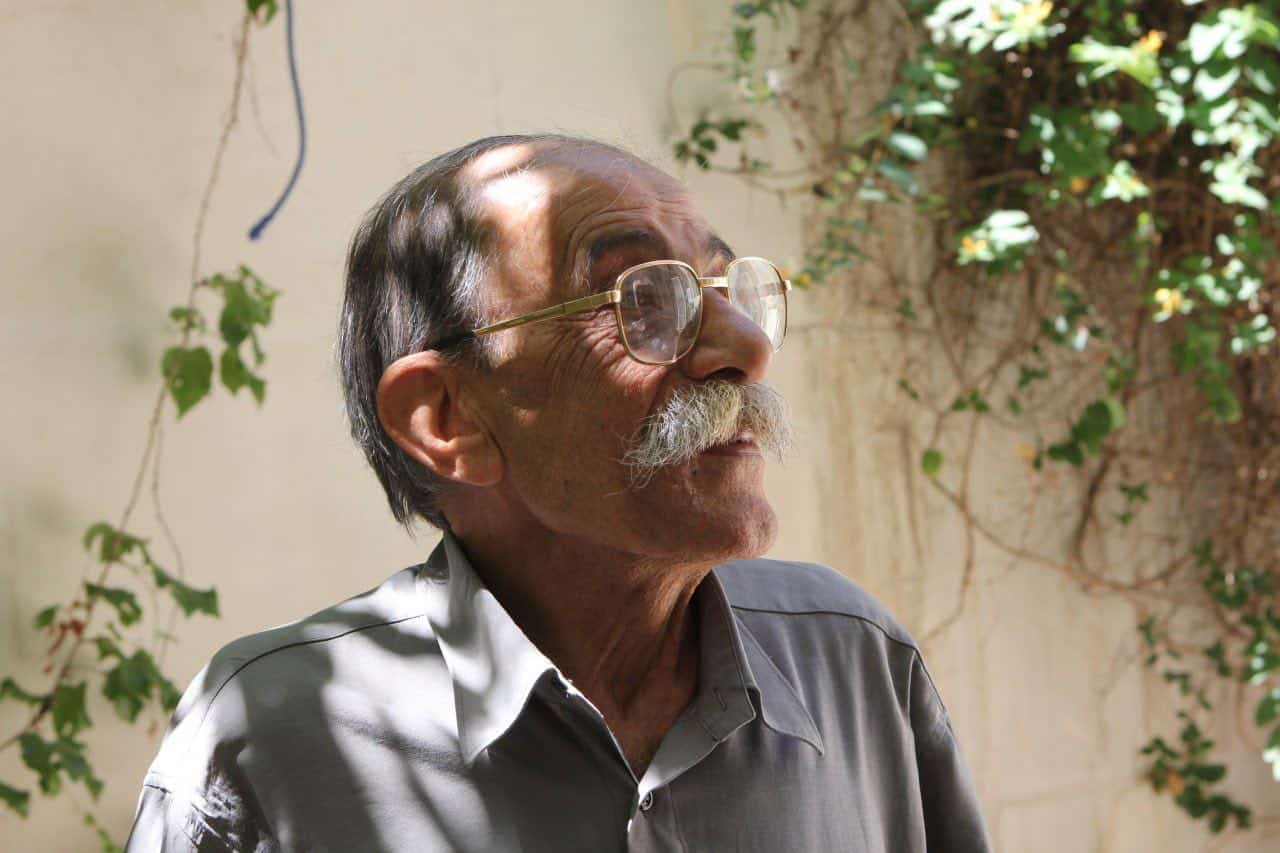
On Wednesday, November 5, 2025, Jamshid Chemirani, one of the most renowned figures in the field of tombak (Persian goblet drum) playing, passed away at the age of 84 in France. Chemirani was a student of the school of Hossein Tehrani. In 1960, he went to France to continue his studies in mathematics, but took…
Read More

Interview with the Makers of the New Qeychak (I)
On occasion of the 8th anniversary of launching HarmonyTalk Online Journal on 6 April 2012, Reza Ziaei, master luthier and researcher on classical music instruments (violin family), announced that the first phase of the project to improve Qeychak has borne fruit. The new instrument would feature a bowl of ribs and the material used for the surface would be wooden. Carrying out the second phase of the project took more than 7 years engaging the new members of Reza Ziaei’s Workshop. In this phase, new researches were conducted from different aspects on the Qeychak and the modern versions of the instrument which were introduced previously by other instrument makers. The available versions of the instrument were studied in terms of their weak and strong technical features.
A Persian Nocturne for Piano
A Night in a Persian Garden is the name of a Nocturne composed by the Persian (Iranian) contemporary composer Behzad Ranjbaran. This Nocturne, published recently by the Theodore Presser Company in the US, was performed for the first time in 2002 in New York City by the young Persian pianist Soheil Nasseri and has enjoyed many performances by other pianists.